Shape Control through Simple Processes
This project seeks to create lightweight, affordable inflatable furniture that can transform into different configurations through user actuation.
In Spring 2021, I took 4.022, which is MIT’s second introductory design studio. For our second assignment, “Transforming Inflatable,” students were asked to build a large-scale inflatable structure or space, testing the limits of its structural, behavioral, or formal characteristics. The inflatable had to be large enough to engage a bodily or spatial interaction and exhibit two active states, in contrast to an ‘on’ and ‘off’ state.
Project Members
Nebyu Haile
Yehoon (Christopher) Lee
Programs + Tools used
Heat Sealer
Rhinoceros 3D
Conception
In making a transformable inflatable, the two underlying concepts that Chris and I wanted to focus on were interactivity and eversion.
Interactivity was an essential root in that we found that interactive art and structures are some of the most perplexing projects and encourage an audience to figure out how it works. Moreover, eversion, "the act of turning inside out," was also an enticing concept; we felt that we could garner a lot of mystery and utility from the technique.
We decided to merge these focuses into creating an interactive piece of furniture that could transform the furniture into a secondary state through eversion actuated by user interaction. We settled on applying these two concepts to furniture because we wanted to provide a practical solution to a real-world problem. Often people have furniture for a specific living situation; however, they may need more or less furniture if guests are over; therefore, it made sense to have furniture that could transform (grow/shrink) based on user actuation.
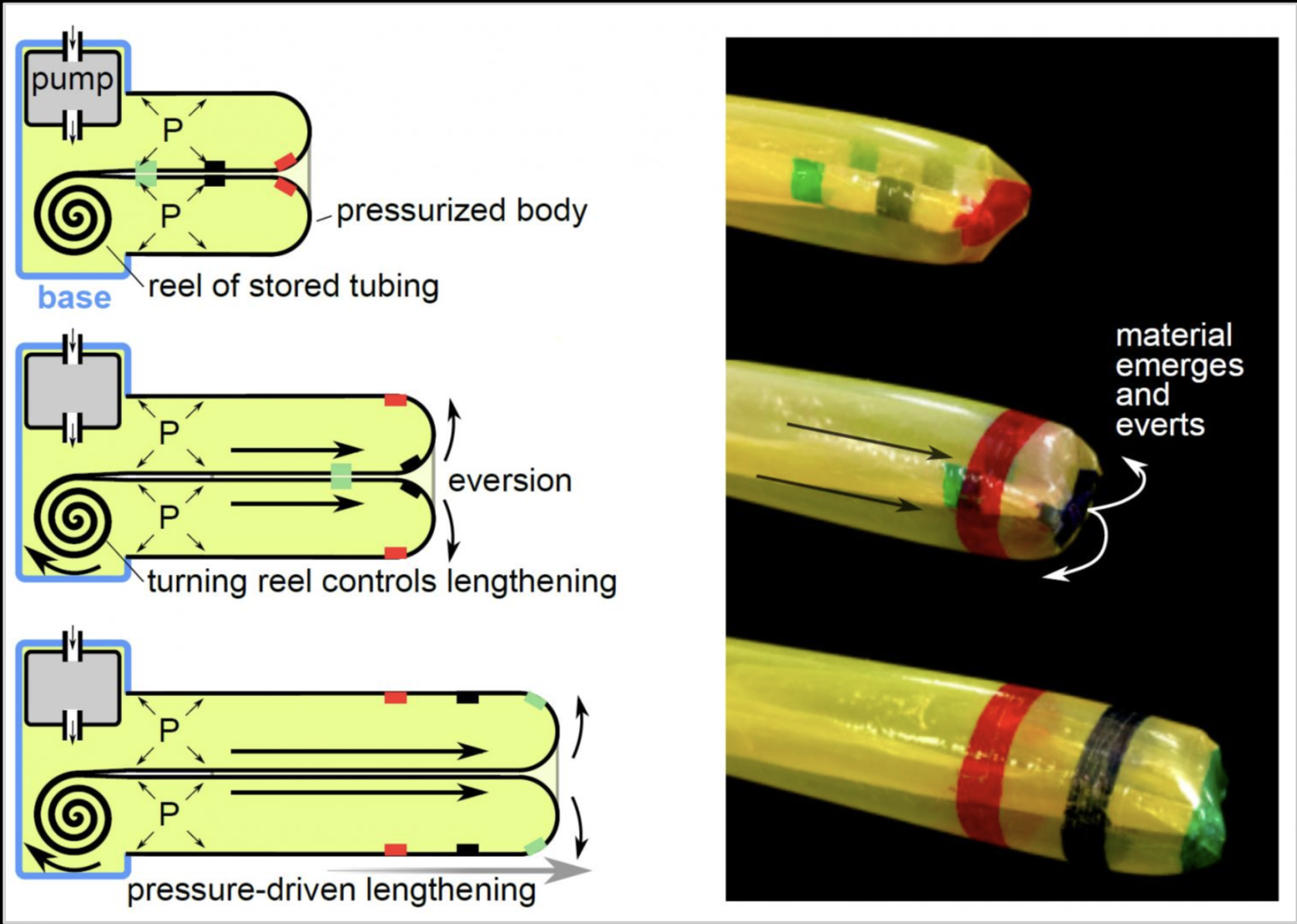
Stanford University - Soft Robot Eversion
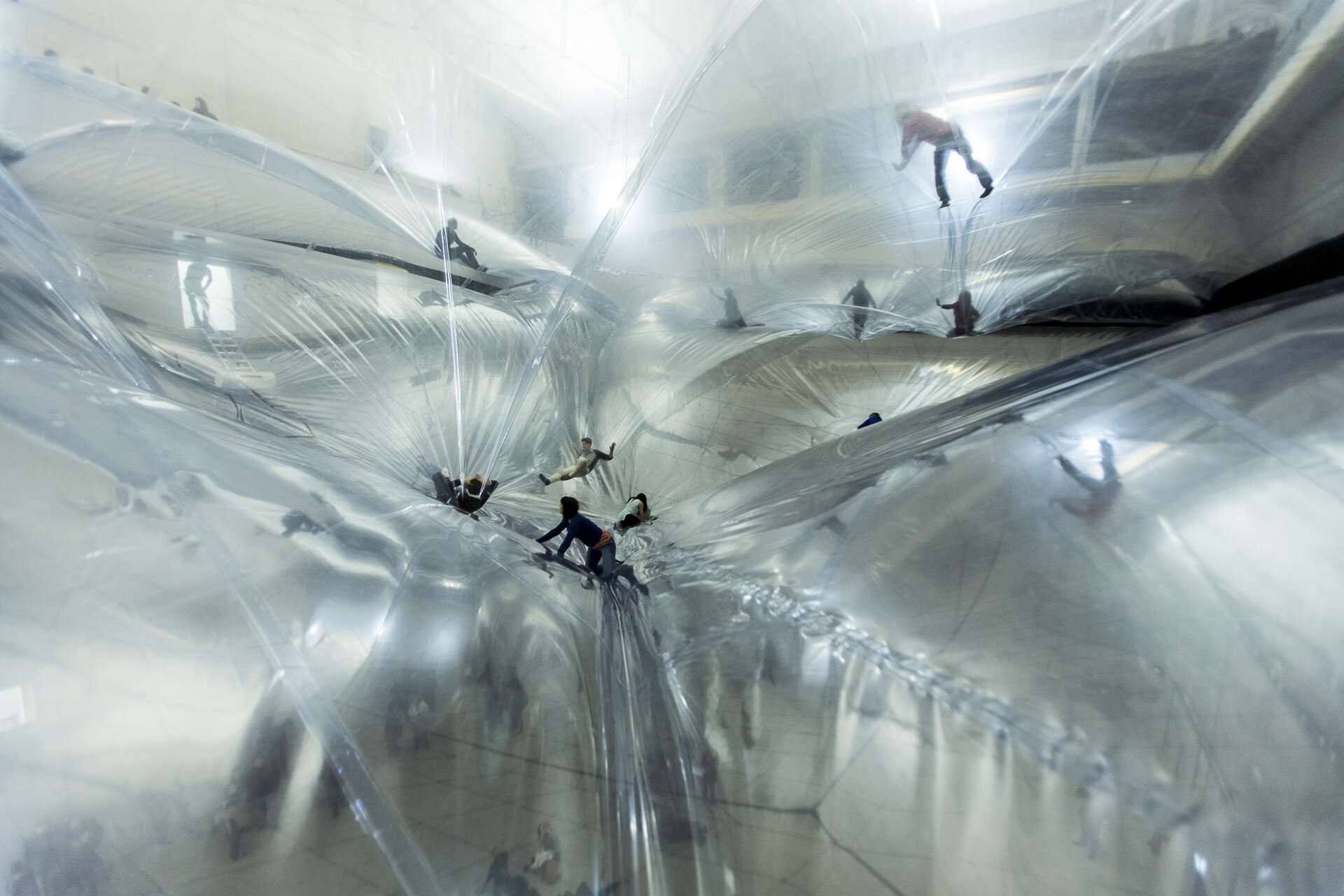
Tomás Saraceno - On Space Time Foam
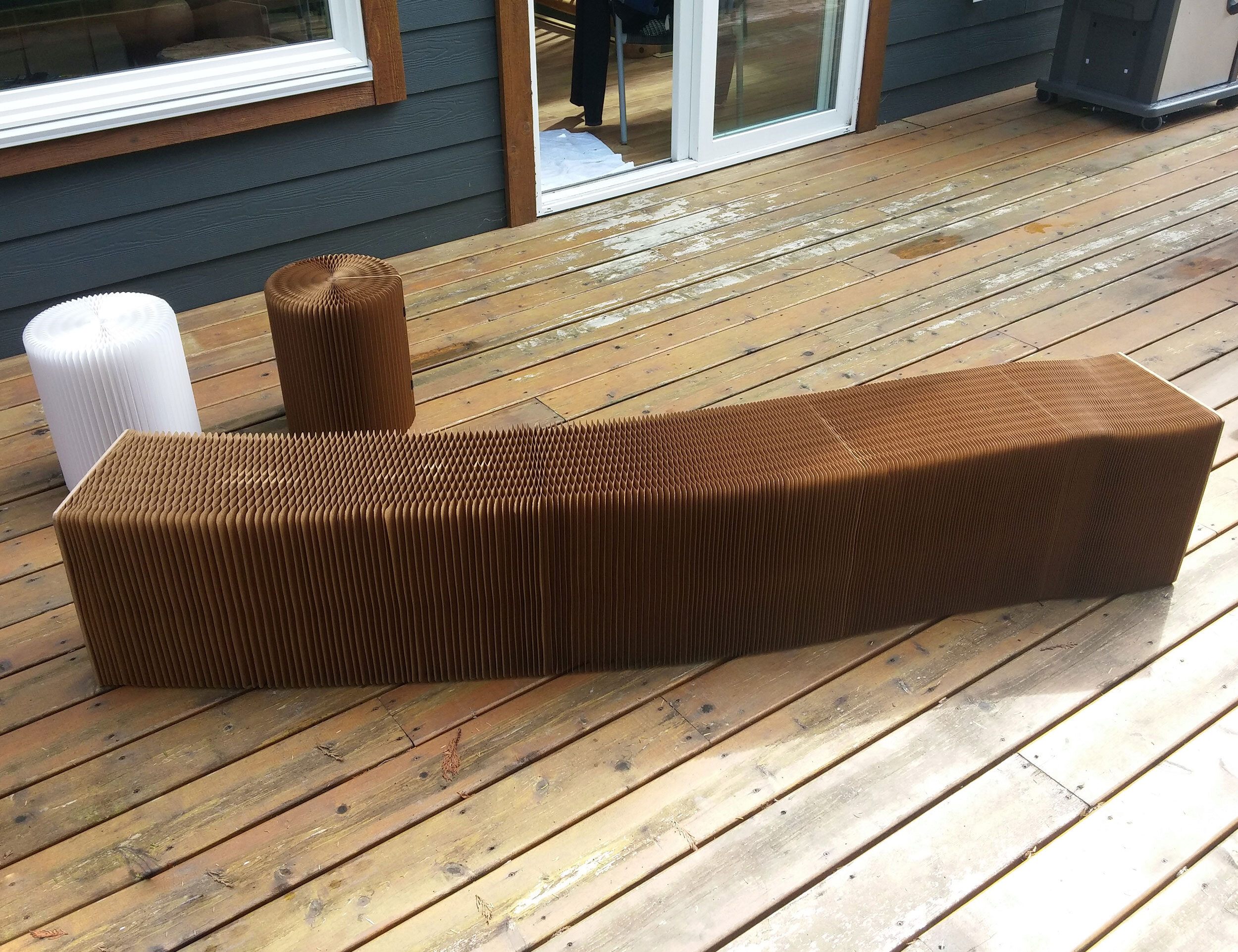
FlexYah Bench - Expanding Cardboard Bench
Concept Development - Weighted Eversion
Before starting on furniture, we ran a series of three small-scale tests of inflatables with eversion. In particular, we focused on weighted eversion, meaning that we got the inflatable to fold into itself through weight placement.
Test 1 - Tube Test
In this test, we created a simple inflatable tube, placing a weight in the center to cause it to evert and then making the tube grow and shrink by adding and removing air.
Ideation - Chris; Creation - Chris & Nebyu

Test 2 - Transforming Geometry
We created an inflatable box in this test, placing weighted bars along various edges, causing the box to fold/evert into itself. Then similarly, we made the box change shapes by adding and removing air.
Ideation & Creation - Chris
Test 3 - Actuated Wall
Looking at tests 1 and 2, we realize it was not practical for someone to be carrying an air pump around. So, in this test, we created a triangular inflatable wall that everted using a weight. Unlike tests 1 and 2, which relied on a pump and additional air to engage the growing and shrinking, we created an attache pocket of air sealed off the wall using velcro. A user could then push on this pocket, causing the wall to grow/raise, and when they released the pocket, the wall would shrink/fall, and the pocket would fill with air again.
Ideation - Chris; Creation - Chris & Nebyu
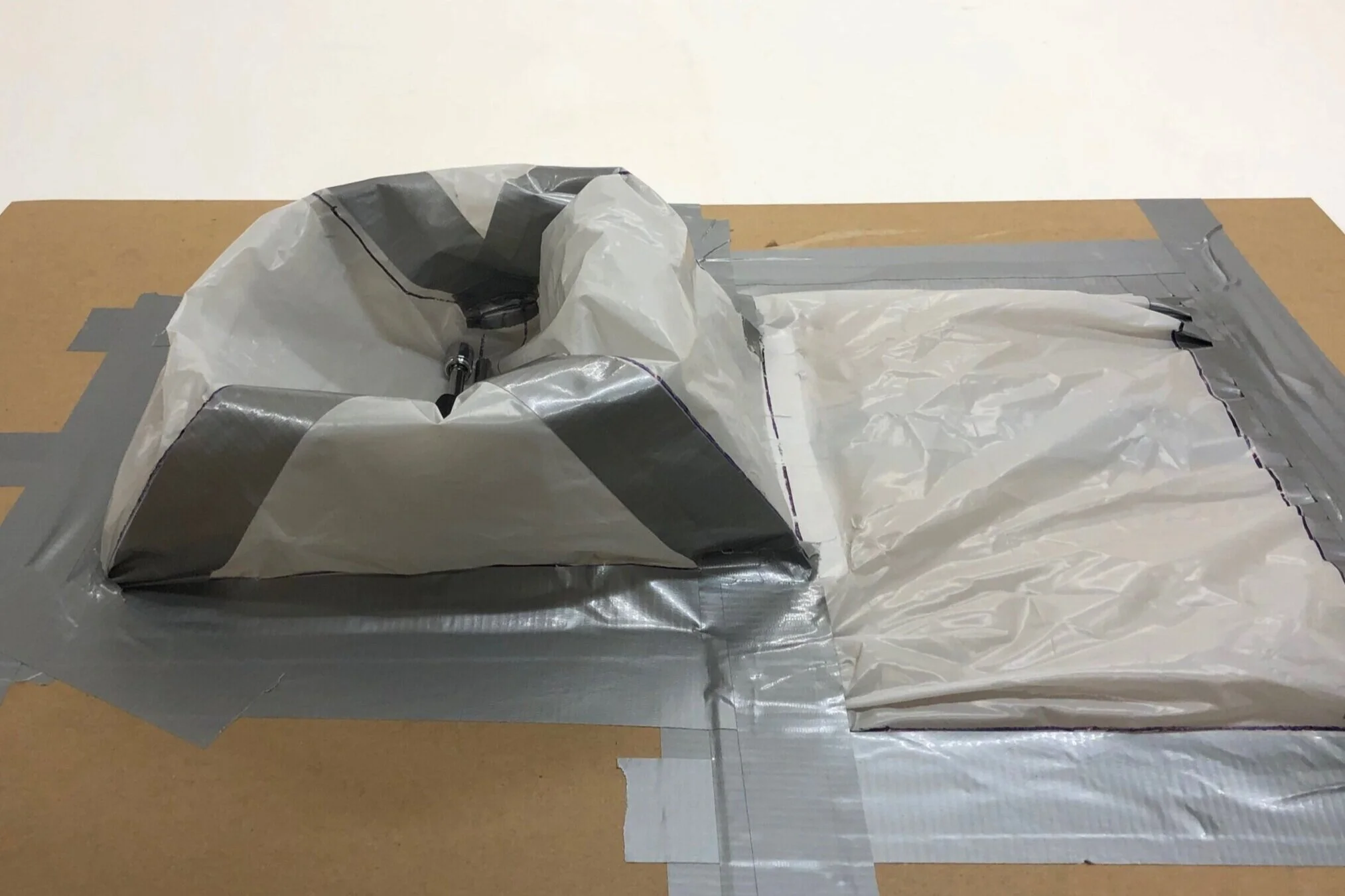
Take Aways
Weighted eversion works to grow/shrink object
While weighted eversion works, it is not practical as it requires a pump to suck out and pump air into the inflatable to get the two states.
Concept Development - Elastic Eversion
Learning from our weighted eversion test, we started thinking of a mechanism that could induce eversion but allow the inflatable to reach a secondary state without needing an air pump. The one idea we liked a lot from the first round of testing was the actuating pocket of air in the Actuated Wall experiment. We then thought about elastics and how they can have an extended and relaxed state and return to either state simply by applying pressure. Similarly, taking these ideas, we ran small-scale experiments to see if we could combine the concepts of eversion and elastics to create an inflatable object with two states.
Test 1 - Expanding Pillow
We created a simple inflatable pillow in this test, attaching two elastic bands, one running from either corner to the other inside the inflatable. The resulting inflatable was a square pillow with everted corners that expand out (second state) when a user presses (actuates) the pad down.
Ideation & Creation - Nebyu
Test 2 - Growing Pillow
We created a simple inflatable tube pillow for this test. First, we attached a nylon elastic band on the interior, running from one to the other. The resulting inflatable was a cylindrical pillow-like tube with everted ends that expand out (second state) when a user presses (actuates) the tube down.
Ideation - Nebyu; Creation - Nebyu & Simmone Lassar (classmate)
Take Aways
Elastic eversion do a superior job at creating two distinct and reversible states than weighted eversion does
While elastic eversion works, difficulties return to the fully everted state; the ends scrunch up after being actuated once instead of nicely flipping inside out.
A lot of research and development is needed to perfectly set up the length and tautness of the elastic band on the interior of the inflatable to get the desired secondary state when one actuates the inflatable.
Prototype 1 : Two Way Expanding Bench
Taking our findings from our weighted and elastic eversion studies, we decided to move forward with a body-sized inflatable bench that utilized elastic eversion. The goal for the inflatable was to have a sitting bench that, when actuated through a user sitting on it, would pop out two additional initially everted seats, and when that user gets up, would evert the seats once again.
Ideation & Creation - Chris & Nebyu
Take Aways
Using elastic eversion for a two-state inflatable on a body size scale is successful to an extent.
The point at which large-scale elastic eversion breaks down is further exacerbated difficulties, compared to the small-scale models, in returning the actuated everted elements to their fully everted states.
At a body-sized scale, more than one elastic is needed to achieve the eversion; as a result, the relationship between elastic length, tautness, and desired secondary state of the inflatable becomes increasingly difficult to calculate/predict.
A design flaw exists. If a second individual is sitting on one of the seats that only exists in the actuated state, if the original individual gets up, they will throw off the chair's balance, causing the actuated seat to evert back in.
Prototype 2A: Bar Table to Table With Seats- Full Eversion
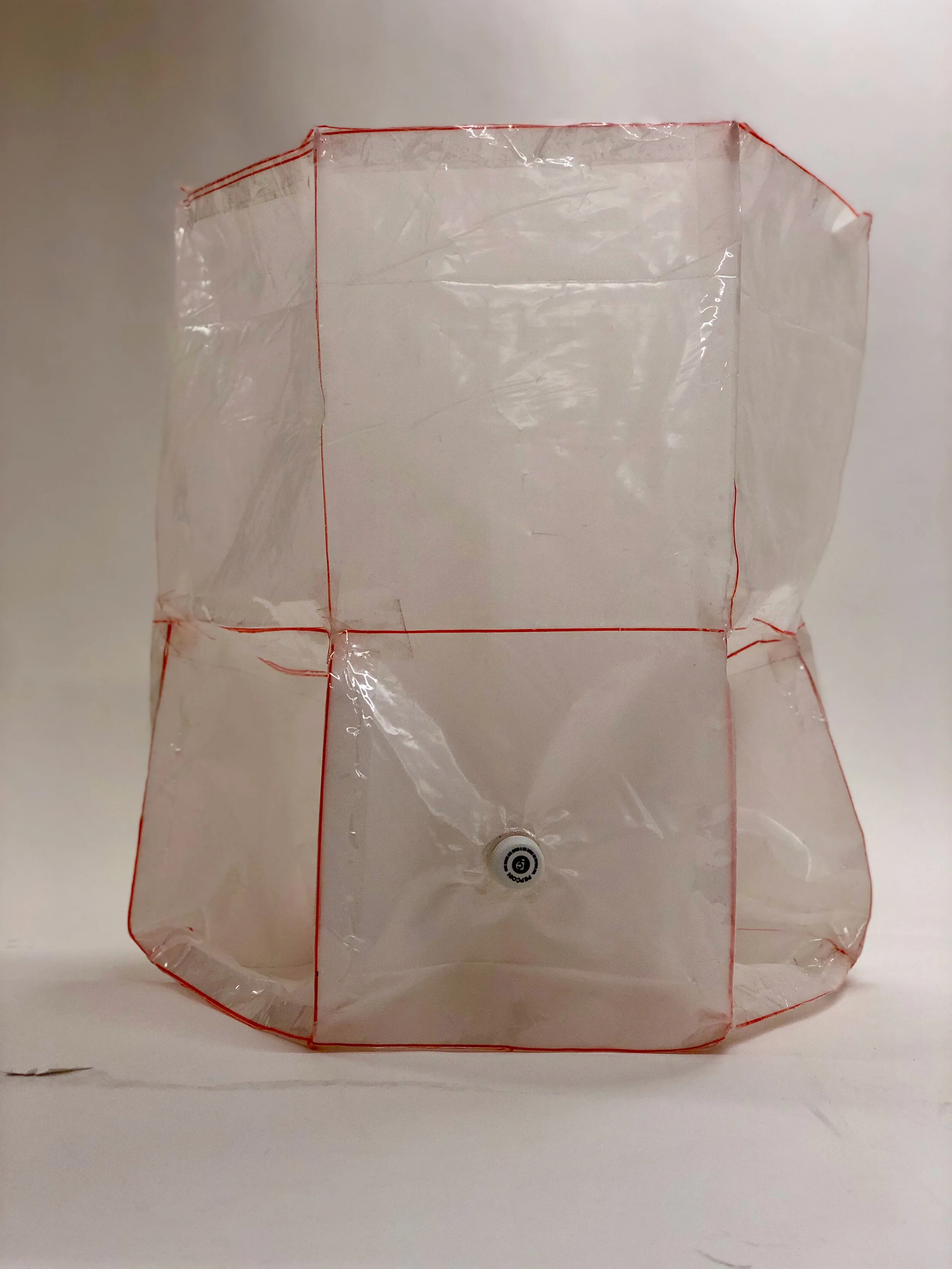
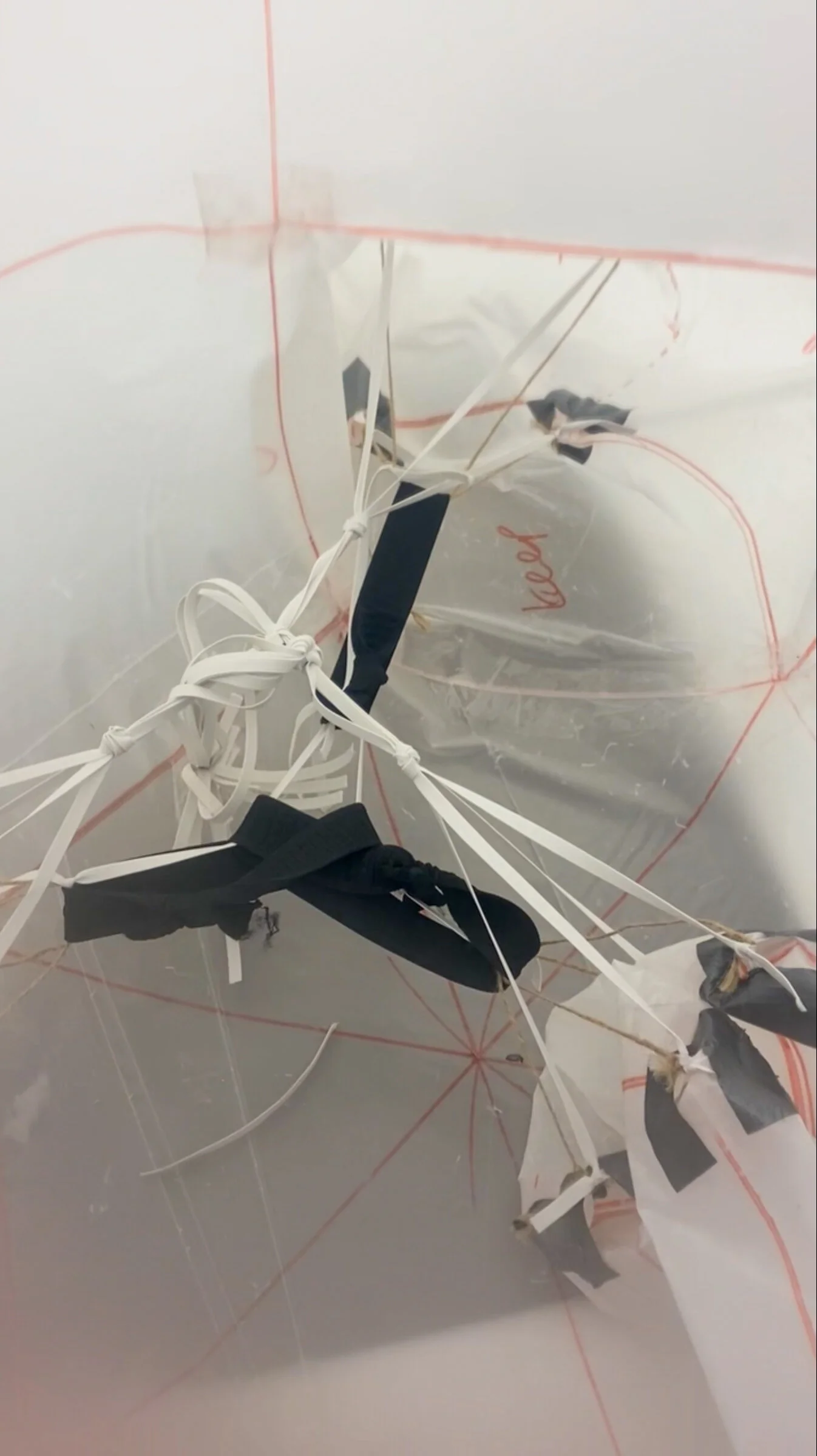
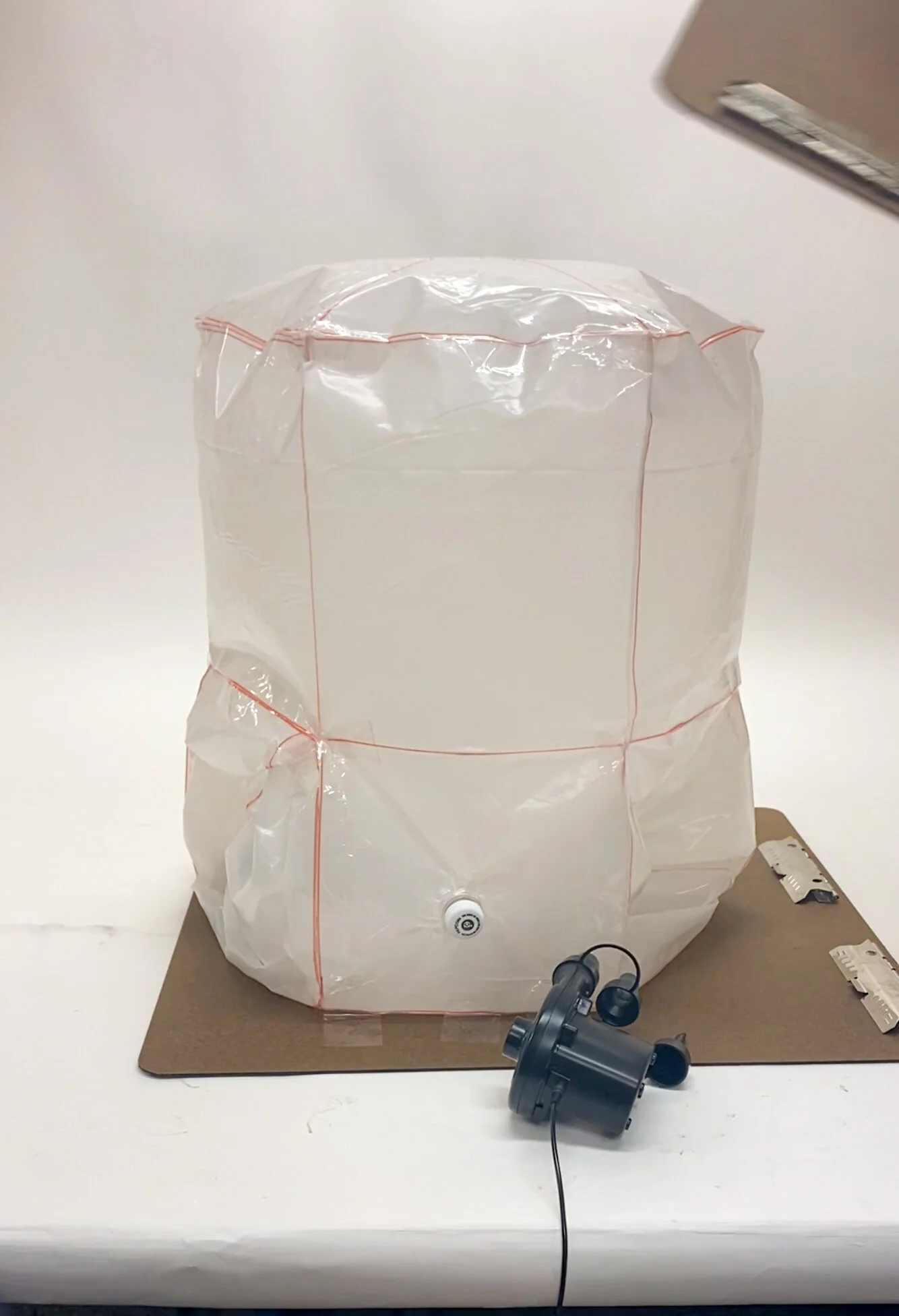
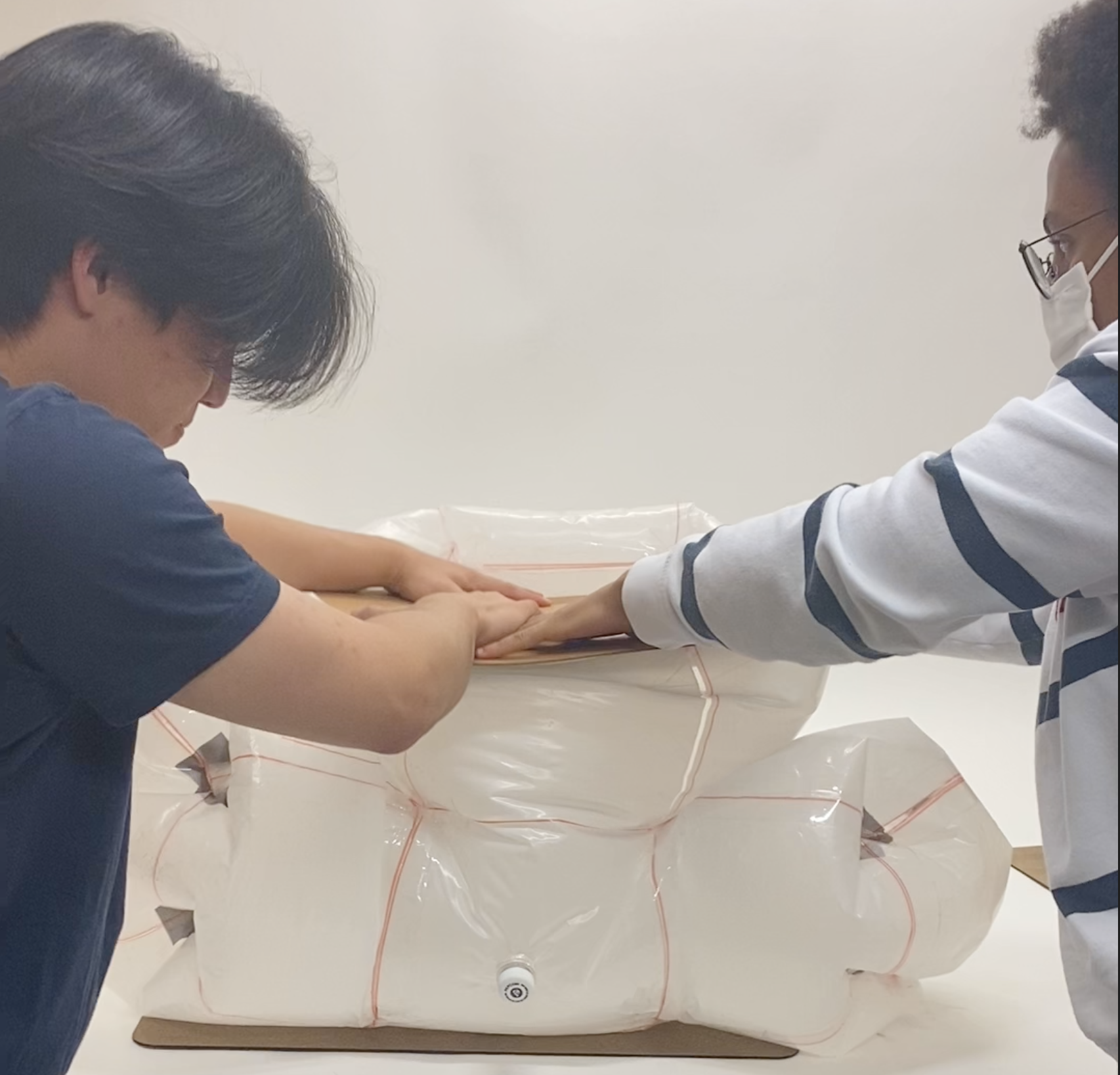
Based on the results of Prototype 1, we decided to make a pivot. Instead of a bench, we shifted to a bar table with an actuatable tabletop that would pop out three seats when pushed down and latched. This pivot was to address that design flaw of the bench which made it impossible for the individuals on the actuatable seat to get up without affecting the seats of others. The key to this design is that the tabletop can be latched down, keeping the inflatable in its actuated state without requiring a person.
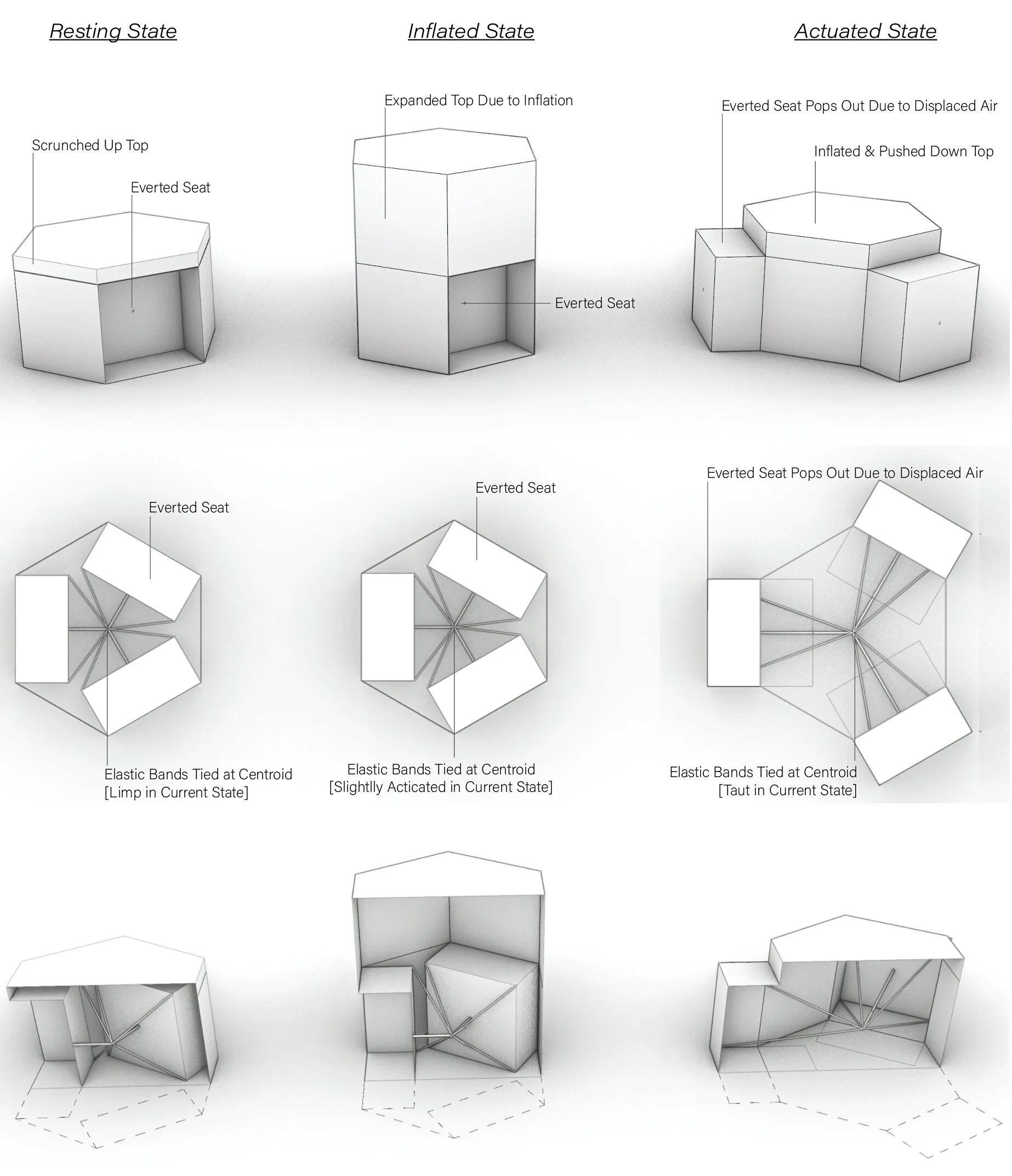

Take Aways
Actuating the seats works well, but returning them to their everted states results in the scrunching of the inflatable and does not look clean.
Without a ridged table top, applying equal actuation force is almost impossible; an unevenness in actuation leads to an imbalance in pressure change internally, causing seats to transition to their actuated states at different times.
Connecting the internal elastics directly to one another allows any errors or unevenness in one seat's transition between its actuated and relaxed state to propagate to the other seats.
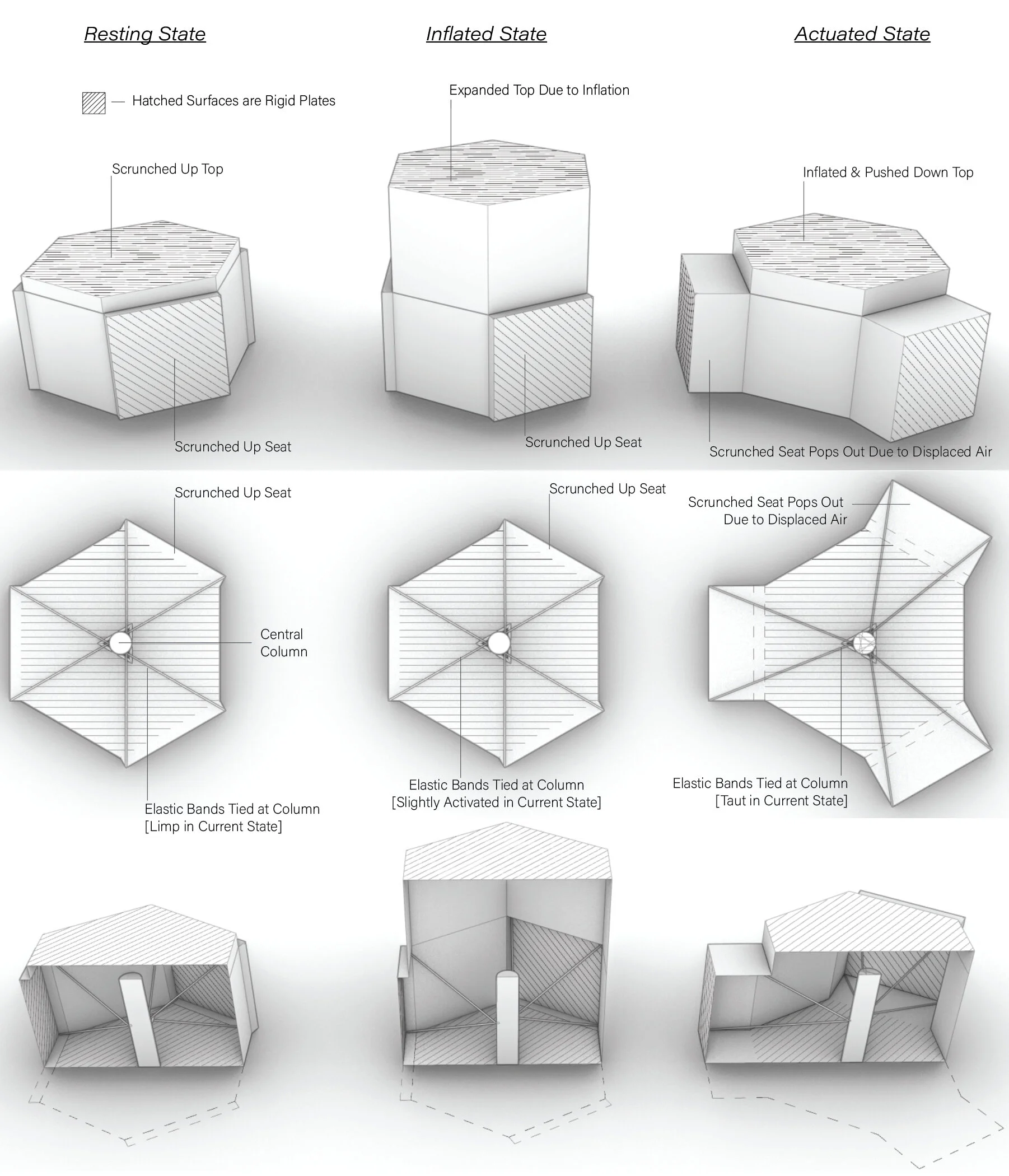
Prototype 2B: Bar Table to Table With Seats - Partial Eversion
Overall we felt that Prototype 2A was almost where we wanted it, so we decided to iterate on it rather than starting fresh.
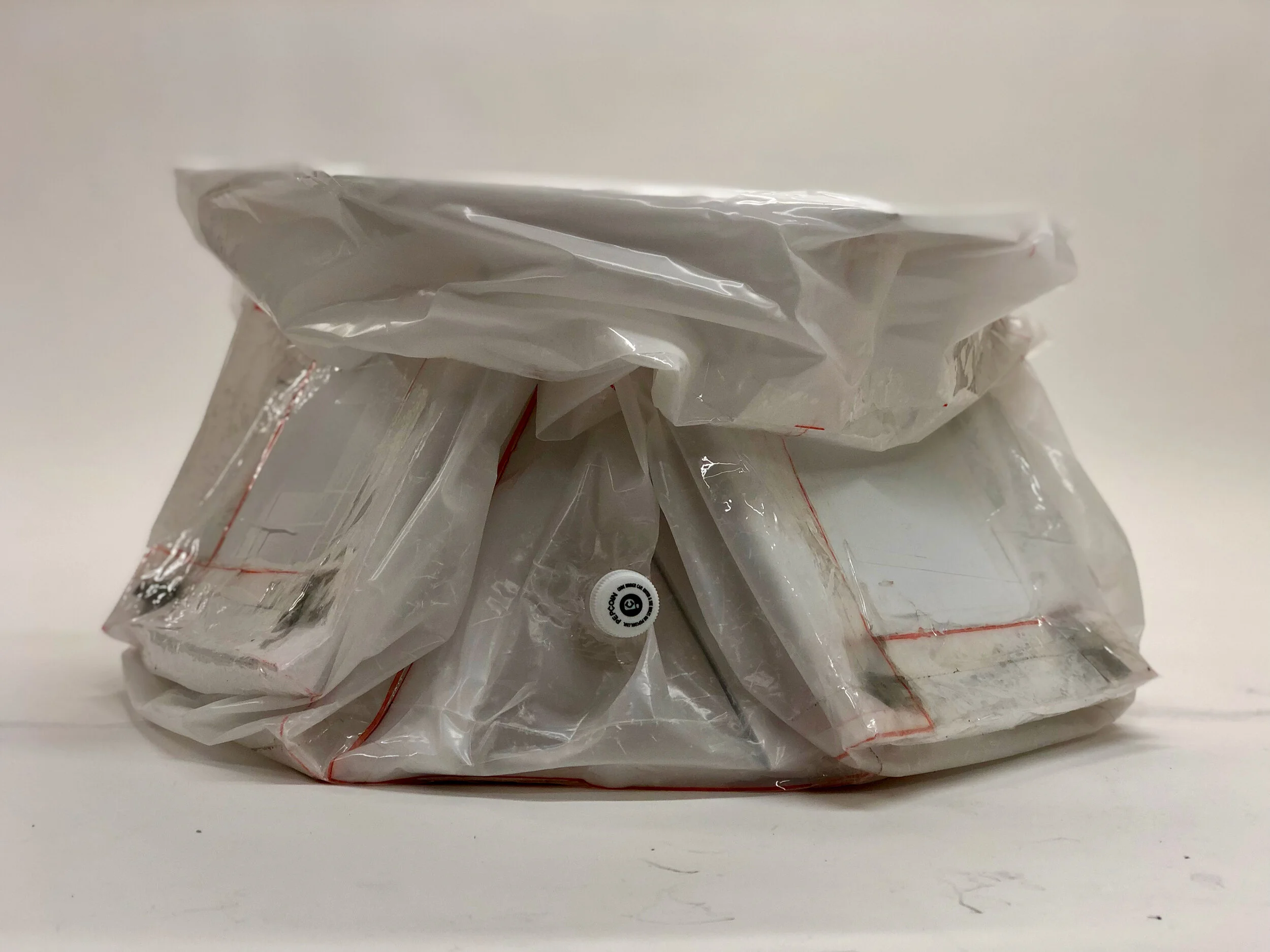
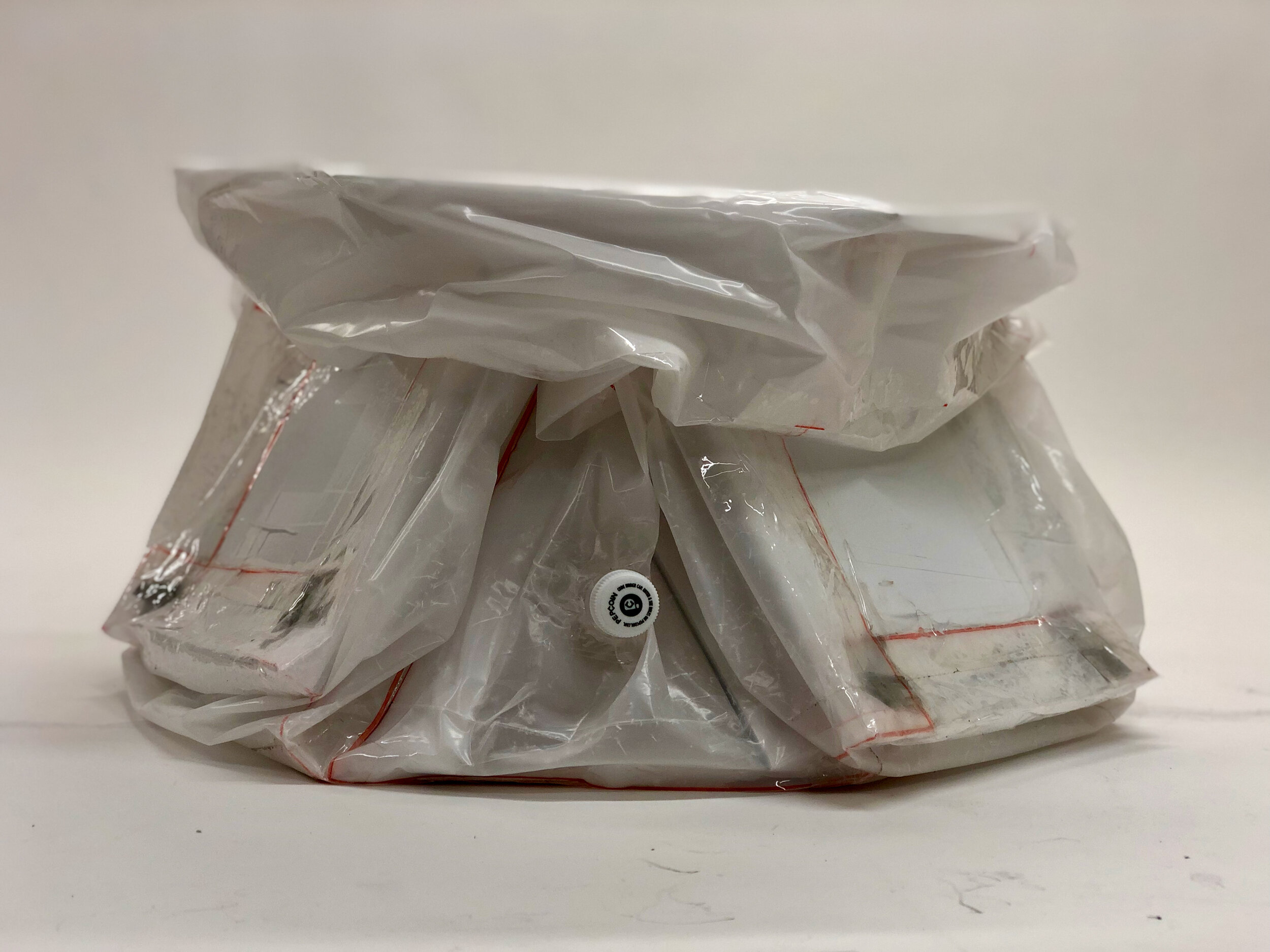
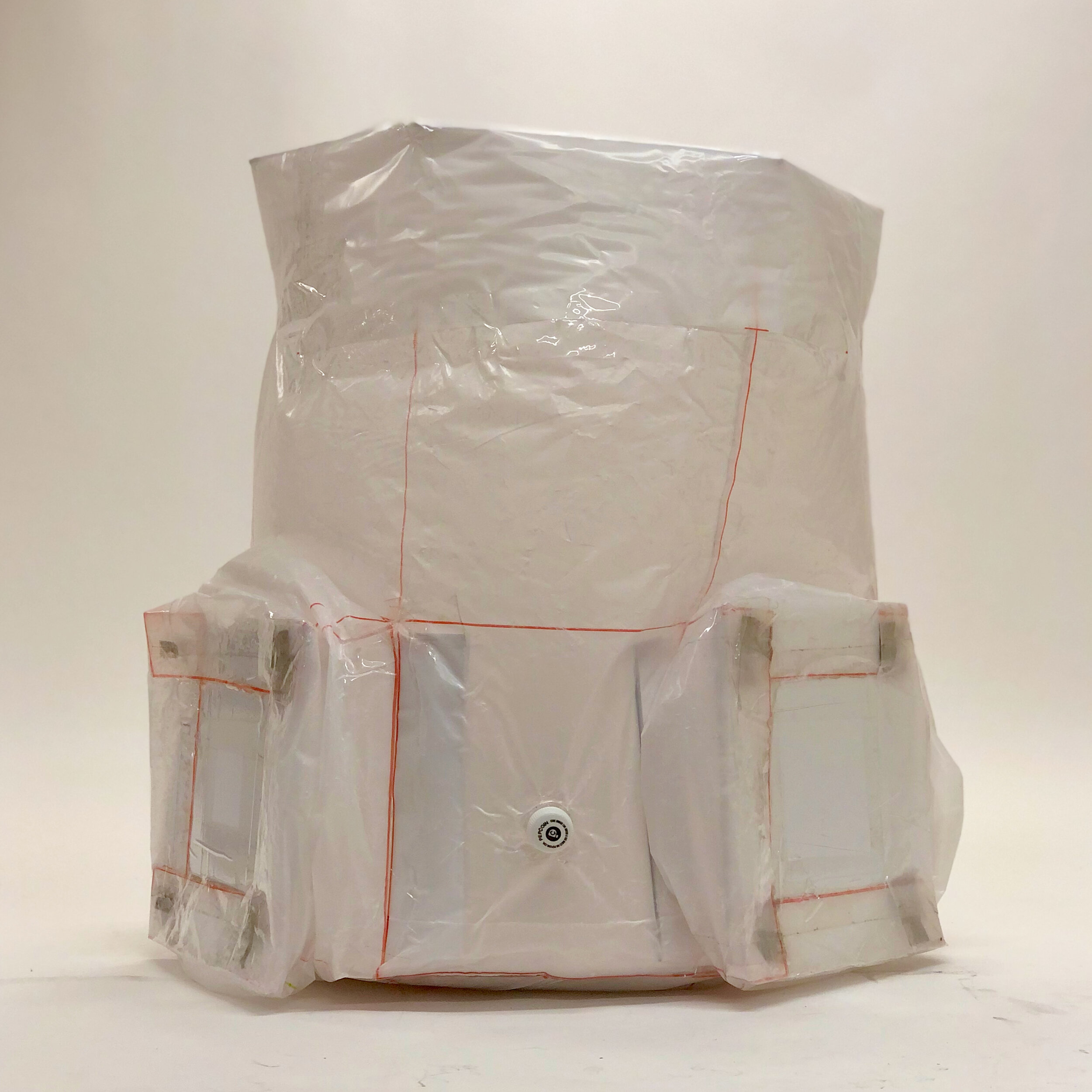
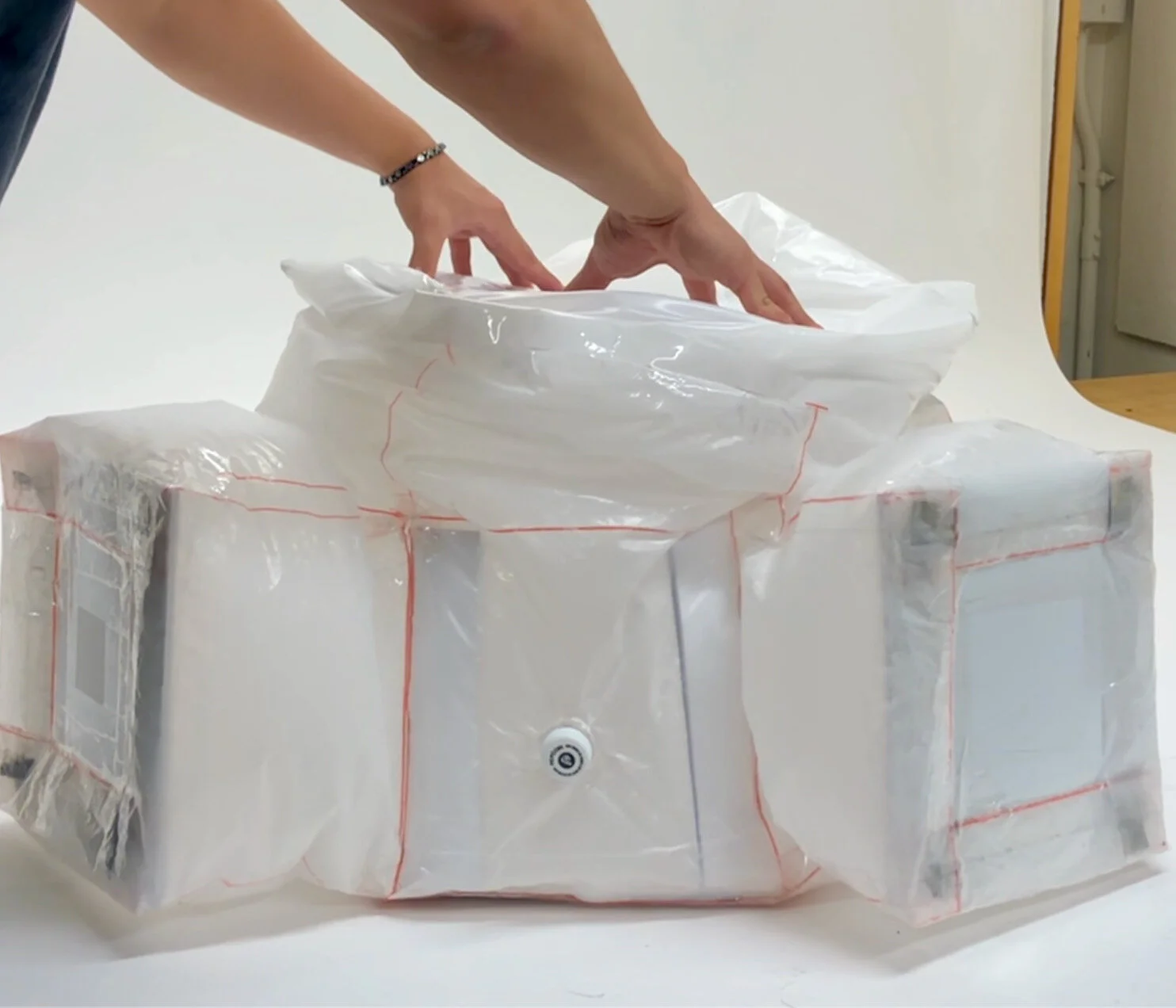
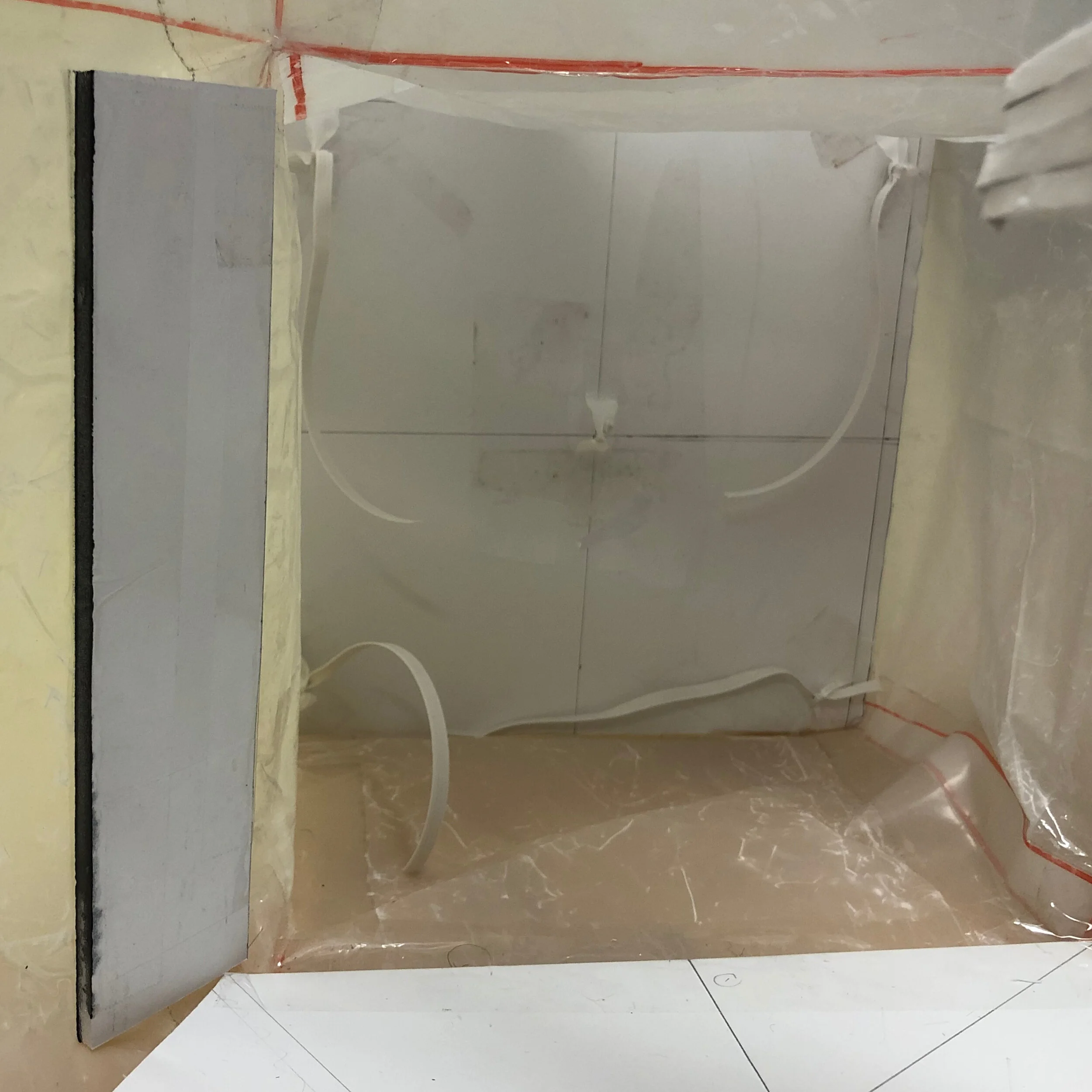
The most significant change between Prototype 2A and 2B is that we decided to go with partially everting the seats rather than fully eversion. The logic behind this change was that if the inflatable were not made of a more rigid/tough plastic material, it would always scrunch up when it returned to the un-actuated state.
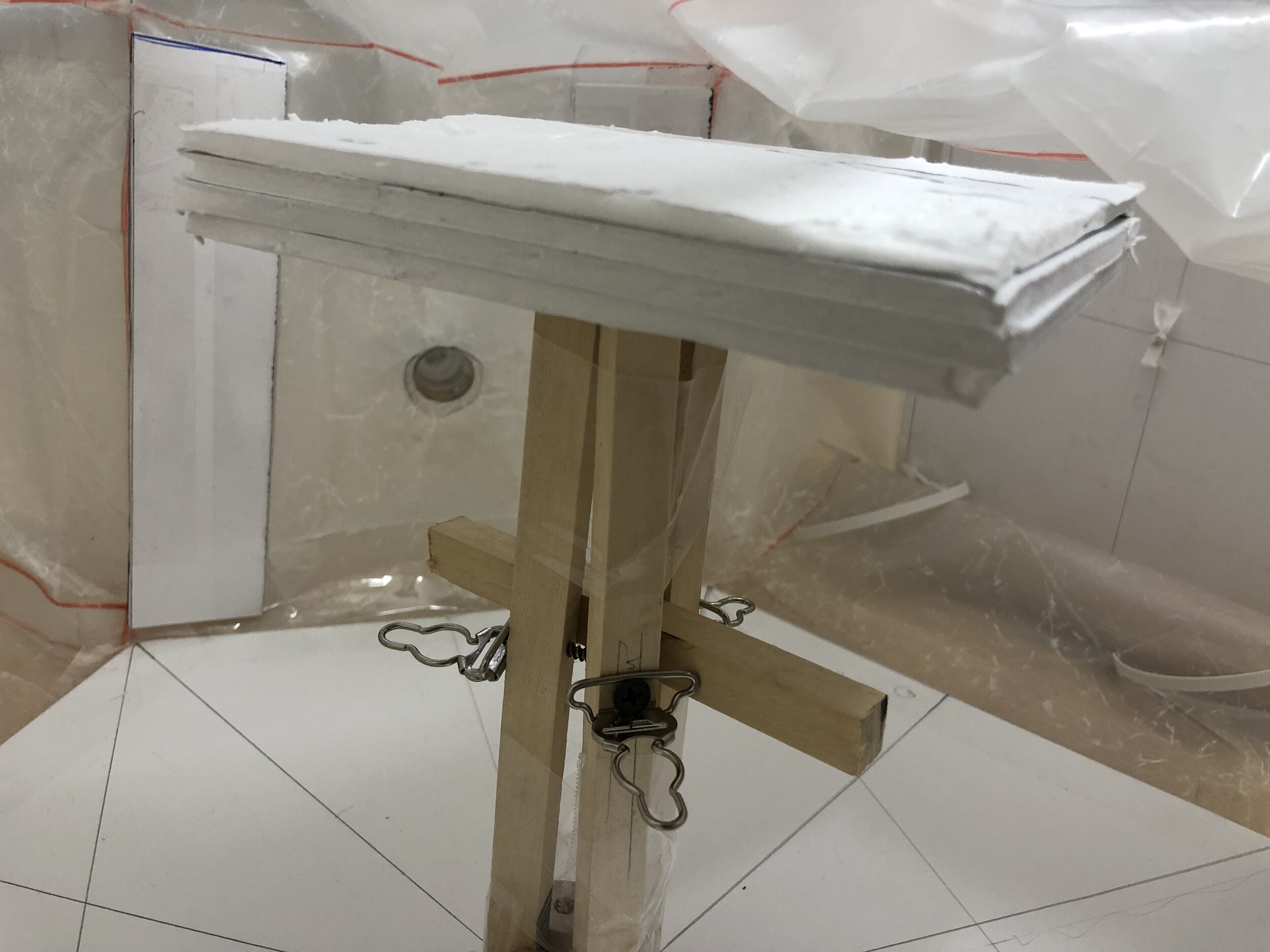
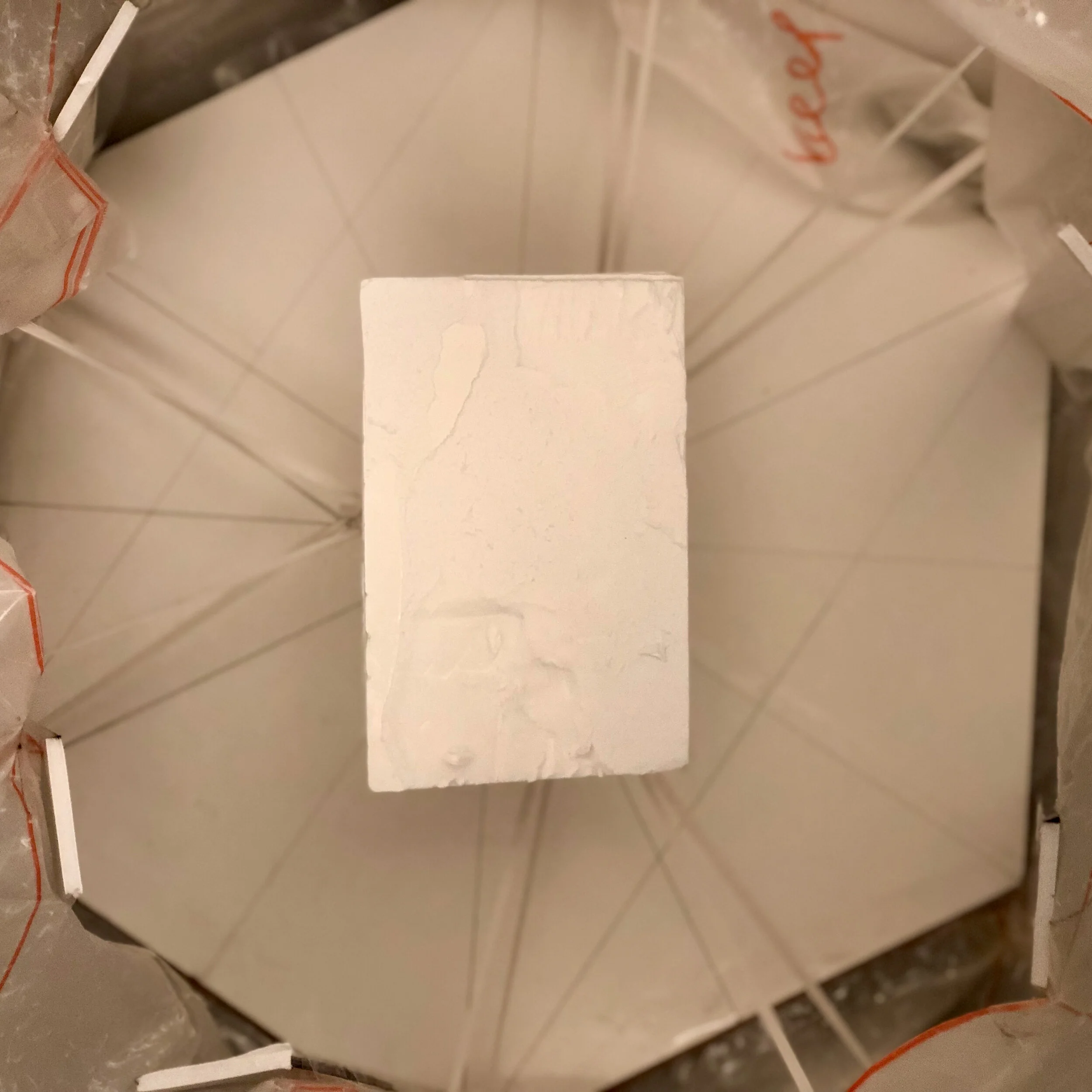
Another thing we changed is that we added a rigid foam board to the inside face of the seats and the tabletop. We hoped this would help more evenly actuate the tabletop and allow the seats to return to the un-actuated state with less scrunching.
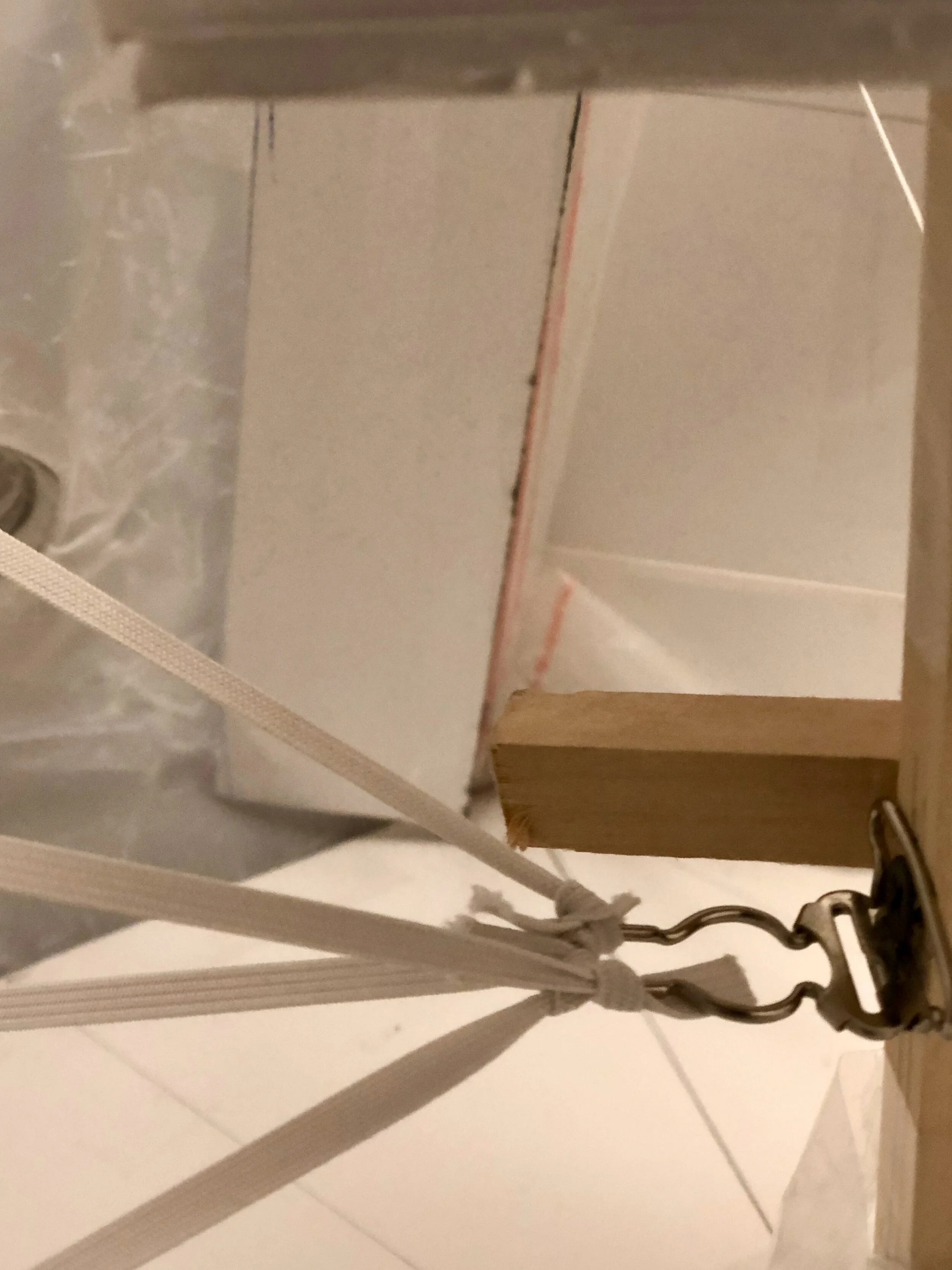
In addition to the foam board, we added a central spire inside the inflatable where the elastics for the seats would connect. Prototype 2 showed us that if all the elastics were attached at one shared node, they heavily influenced one another if any mistakes happened with any individual seat. Therefore, we hoped that if we connected the elastics to a rigid central spire, any errors with one seat eversion would not affect another seat.
Lastly, we tweaked the elastic length and tautness to achieve a better transition between the two states.
Reflection
+
Future Investigation
+
Architectural Scale
In the end, I think that we accomplished what we set out to do by creating a two-state actuated inflatable furniture based on elastic eversion. While I will admit that our prototype was very rough around the edges and aesthetically is not where it needs to be, it did show that the concept works.
Suppose we were to continue this project or do it again. In that case, the first thing we would do is investigate the relationship between the elastic length/tautness and how it relates to the inflatable second state. On a similar note, the second thing we would do is study the relationships between air pressure and the geometry of the inflatable. If we master these two variables, we could create full eversion inflatable furniture or structures that are consistent and cleanly transformed between the two states.
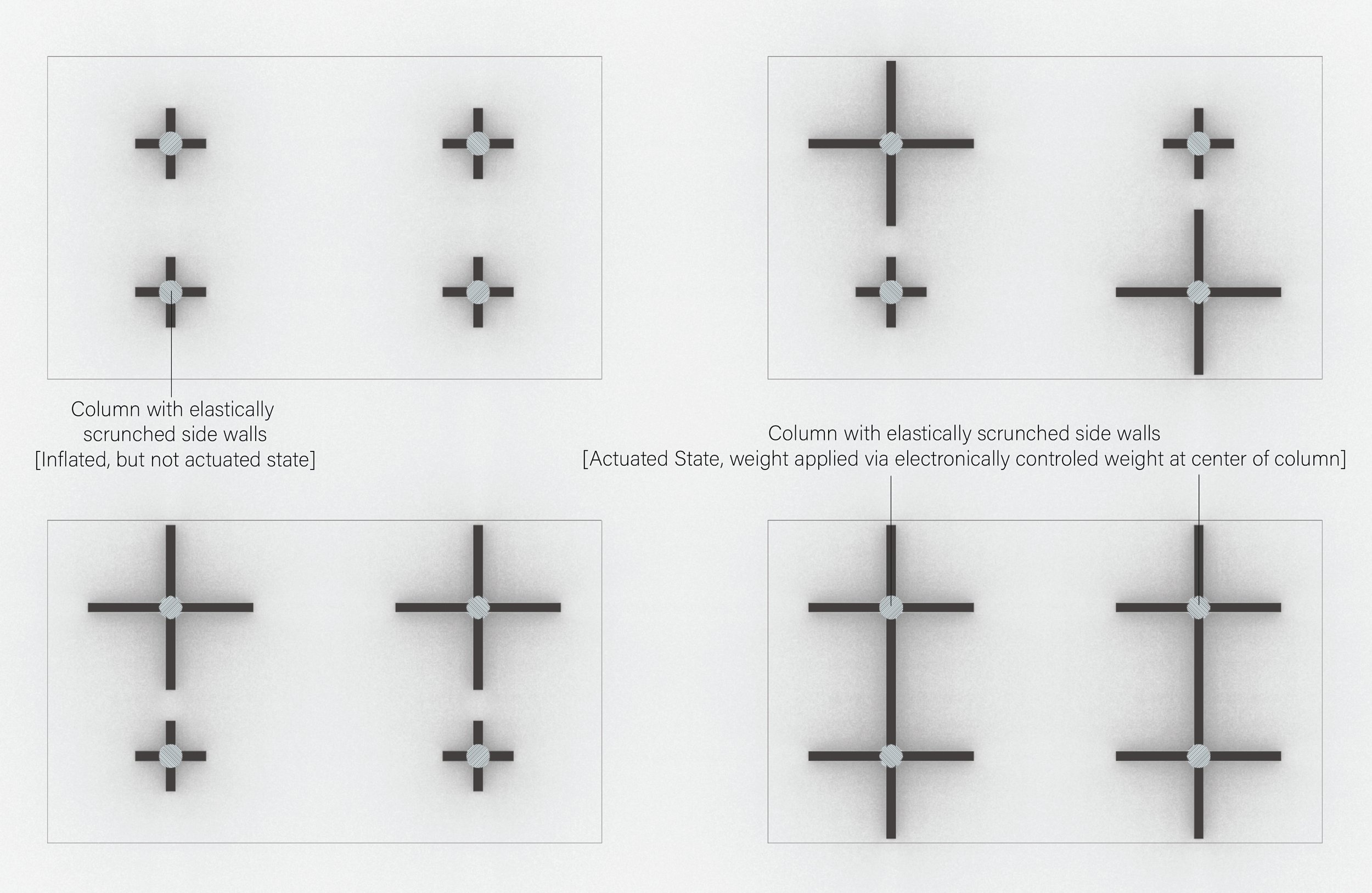
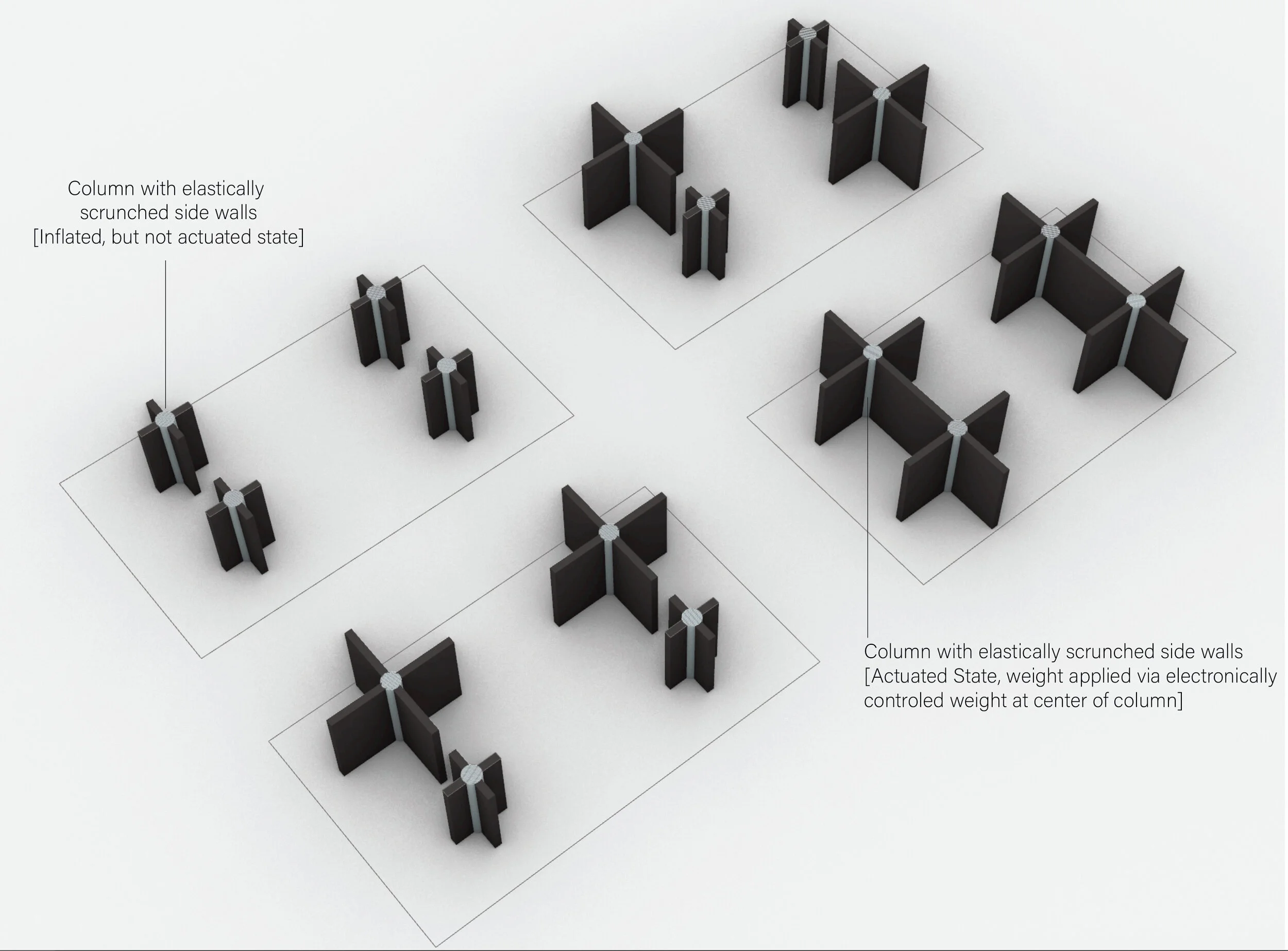
If we can perfect this technique, we would like to investigate the concept in an architectural space. A proposed example is shown below of lightweight movable column with everted sidewalls that could be inflated, and through a wirelessly controlled weight could pop out walls to divide a large space.