Shaped Column
This project was about creating an efficient and visual pleasing collumn
In Spring 2020, I took a class called Intro to Structural Design, and as a project students were tasked with designing an efficient collumn made of balsa wood and then predicting failure loads using structural calculations and comparing them to physical testing. The column desings had the following restrictions:
Height between 12” - 34”
No piece of balsa could have a cross section greater than .125”. However you can glue up to 4 pieces of wood together to make larger sections
The columns were judged in three categories:
Aesthetics
Height to Load Ratio
Weight to Load Ratio
Project Members
Nebyu Haile
Programs + Tools used
Rhinoceros 3D
Instron Machine
Laser Cutter
Ideation + Design
In coming up with a design for the column, I was inspired with the concept of taking from structural principles and then coming up with the design rather then coming up with a design and then trying to force it to be structural efficient.
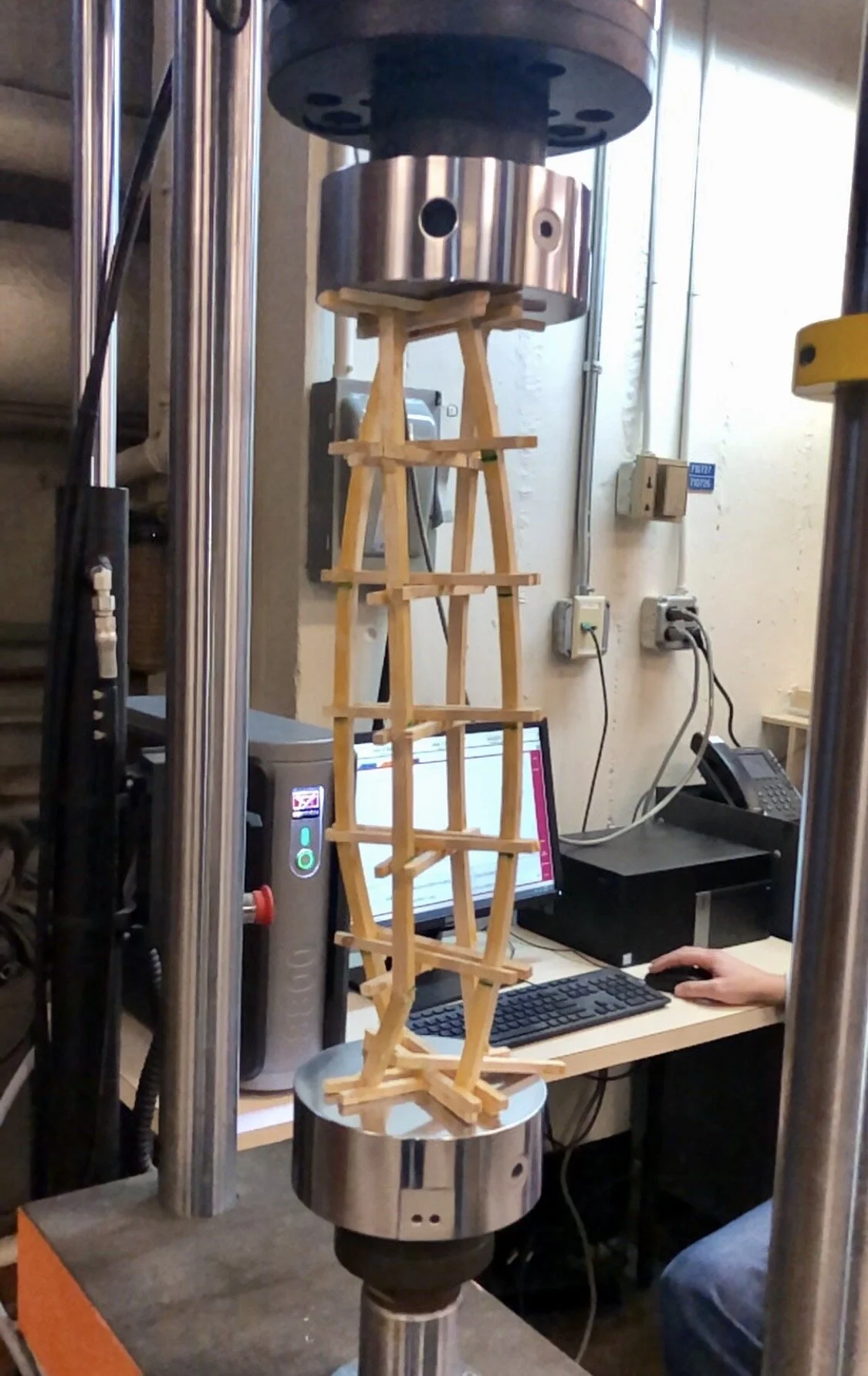
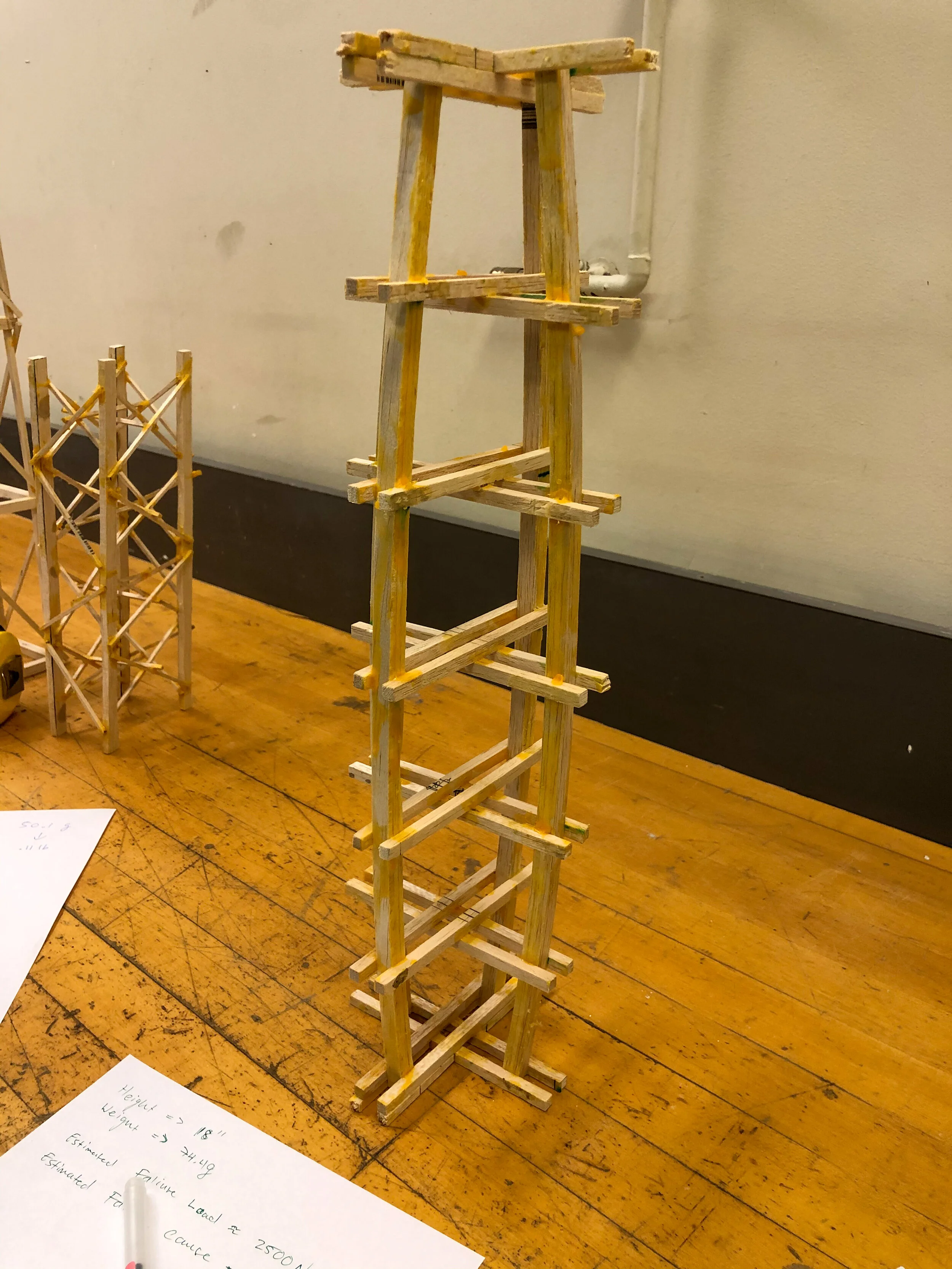
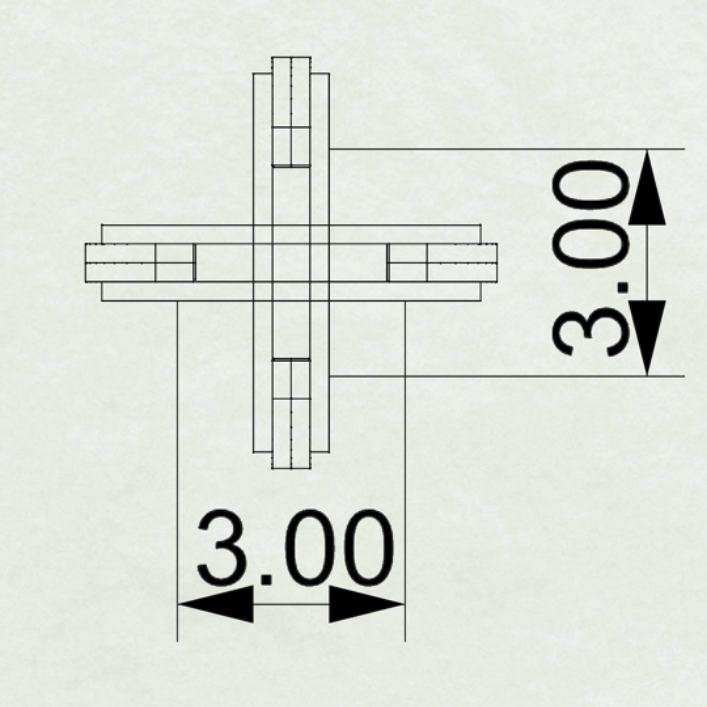
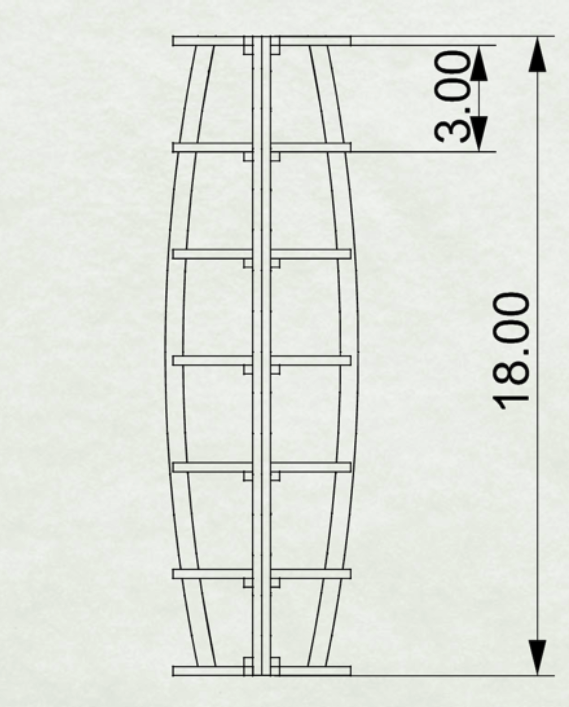
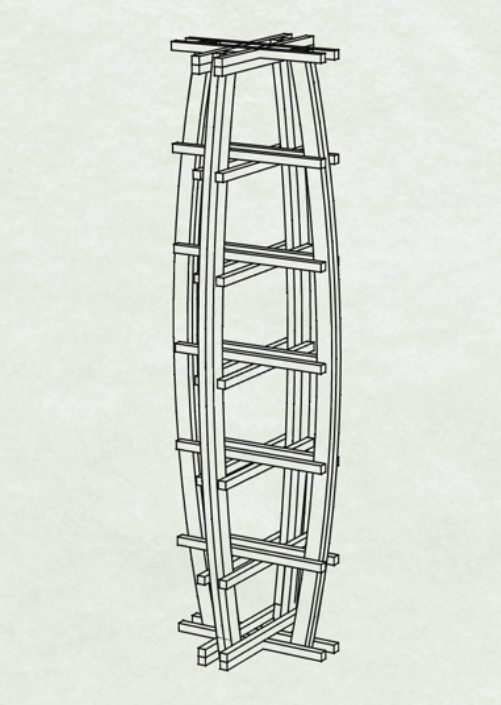
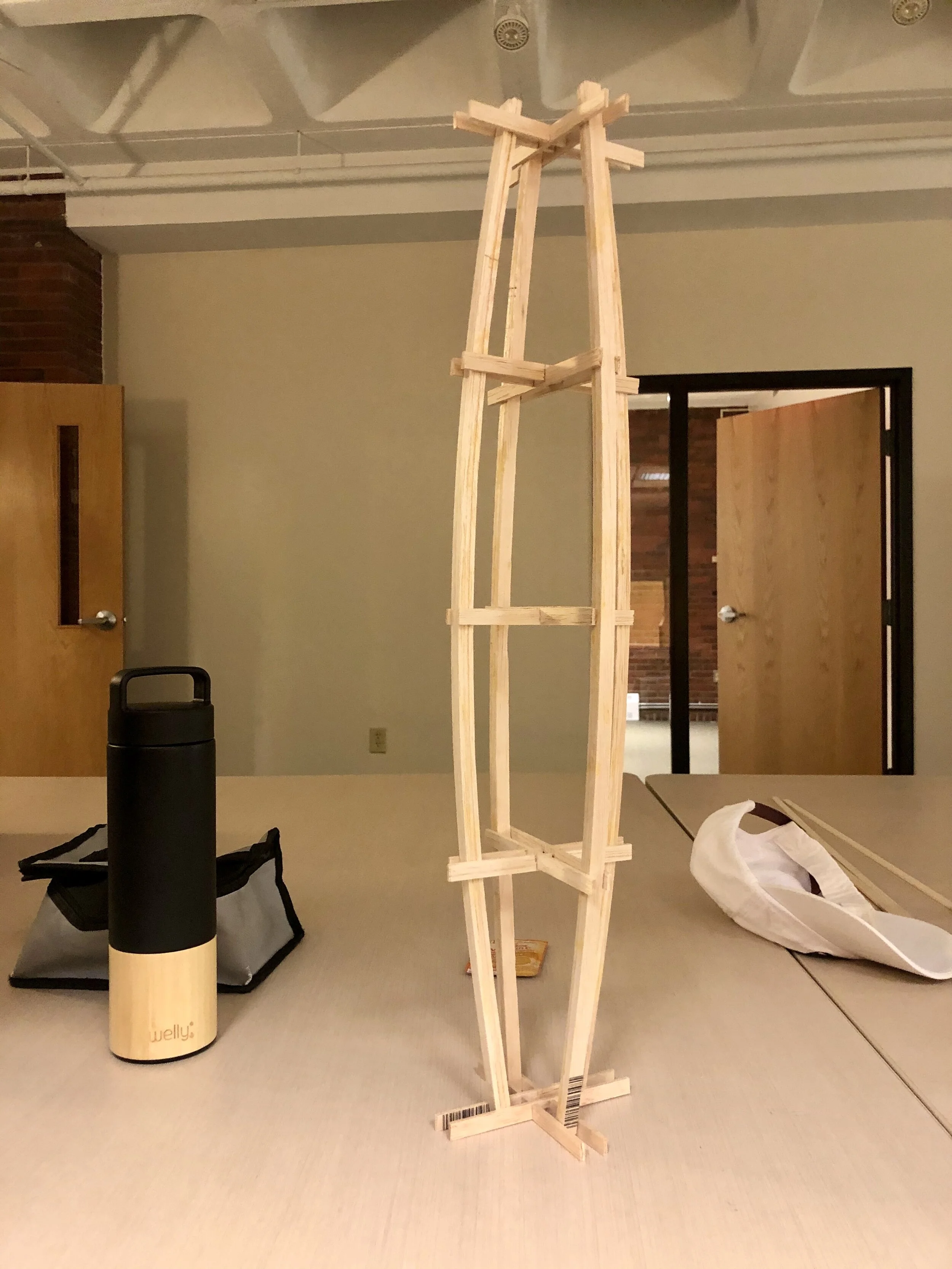
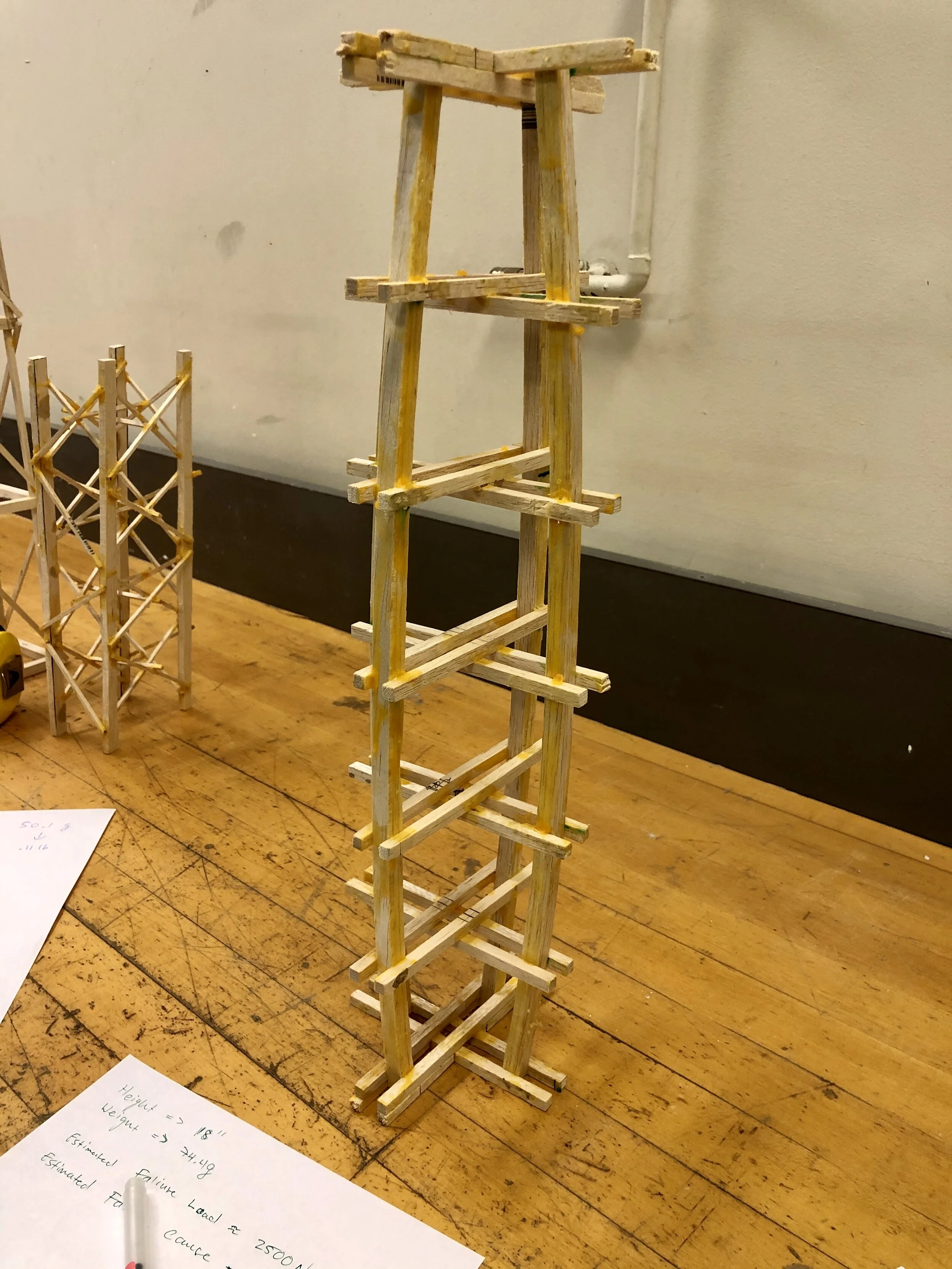
My final design had a bowed design to improve buckling load, and then furthermore it had a hollowed, square donut cross section to create a section with a greater moment of inertia. Finally the column had “X” cross section braces to help with buckling.
Building The Column
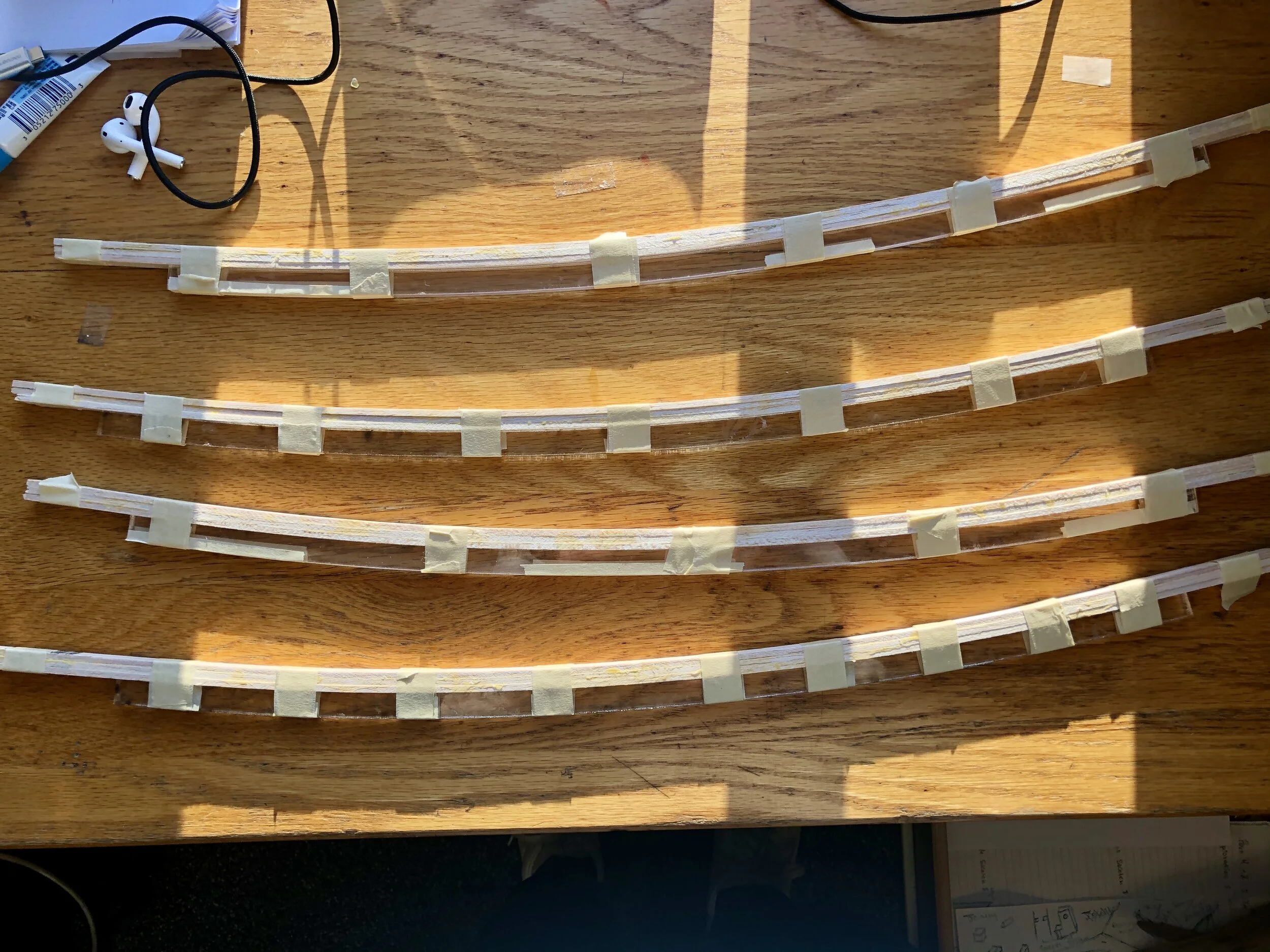
The construction of the collumn was rather simple, the most challenging part was creating the the bowed elements and I was able to do that by laser cutting a mold using acrylic and using tape and wood glue to make the glue laminated bowed elements. Originally I had the cross braces notch onto themselves to create a flat profile, but as this reduced the structural capacity I switched it to a stacked “X” design later on.
Testing + Results
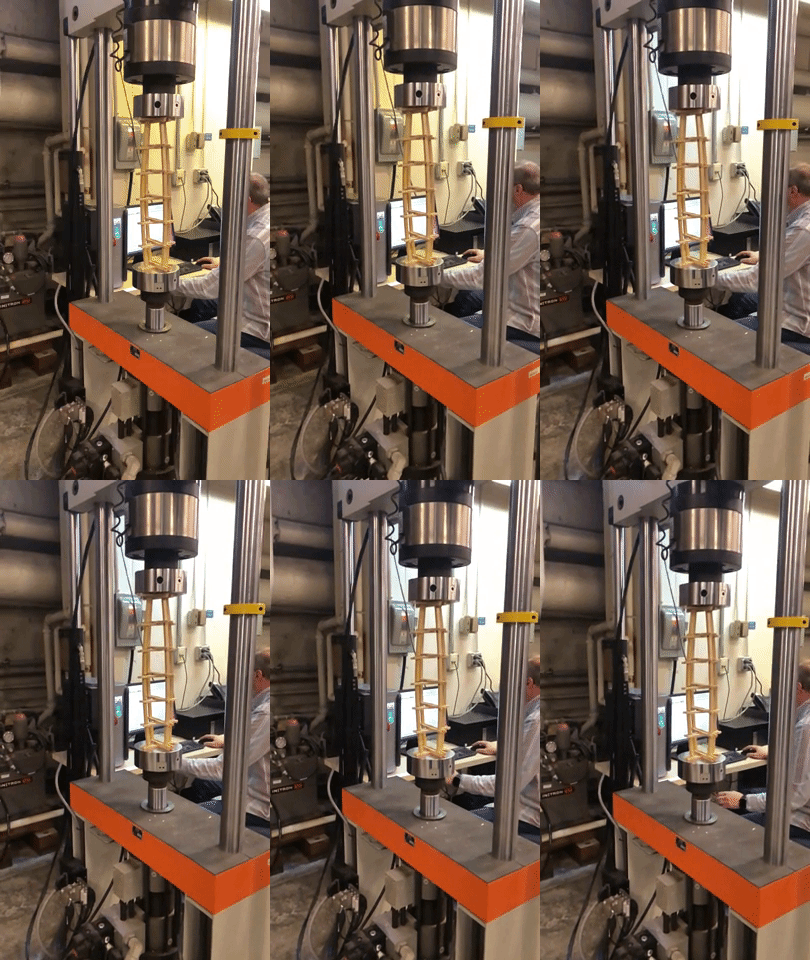
Based on my calculations I estimated a crushing load of 622 N and a local buckling load of 3,140 N and a global buckling load of 21,000 N. Using a Instron machine, the column was loaded slowly until at least one member failed meaning cracked in half or buckled.
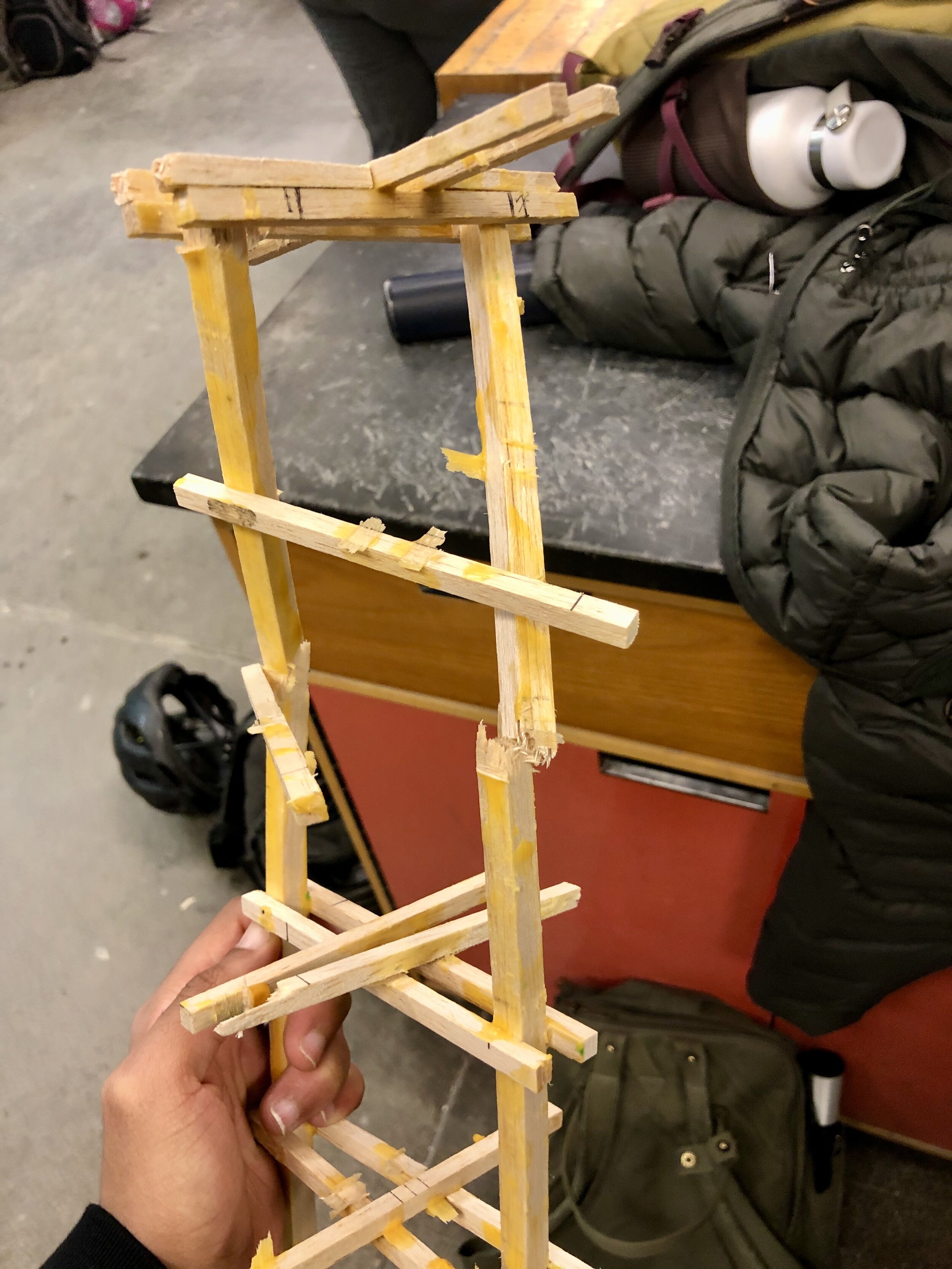
My column failed at a load of 2344 N which was 94% of the estimated crushing failure load of 2,487 N. In regards to the failure method, it is hard to say because while testing, shortly before the max load (~2200 N) a loud pop was heard, but the column had not buckled globally or locally yet, this could very well have been a crushing failure but closer inspection was not taken. In the case that we say that the loud pop was not crushing failure then the failure mode was local buckling, and in this case the failure load of 2344N was 75% of the estimated local buckling load of 3,140 N. [A more detailed analysis can be found in the project pdf]
In the end, my column won the efficiency metric for height to load and came second in weight to load and my calculations were almost on par with observed results, so overall I was very happy about this project.